
 The highest IVF success rates are reported in women under 30 who have an around a 26% chance of having a baby. Philippe Put/Flickr, CC BY Thanks to IVF and donor conception, infertile couples, single women and lesbian couples now have a better chance of starting families. But while you might know someone who has gone through the process, it’s rarely openly discussed. Last month, you submitted your questions about donor conception and IVF and we put them – and some of our own – to The Conversation’s experts in law, embryology, sociology, psychology and donor conception. Here are your questions answered (scroll down ): 1. How much are men compensated for donating sperm and women for donating eggs? 2. Where do donors come from? 3. What sort of identifying information is filed about open donors on the information register? 4. When and how should you tell children they’re donor-conceived? 5. What kind of contact can donors expect when their offspring are adults? 6. What are the options for gay men to start a family? 7. What logistical barriers do lesbian couples face when starting a family? 8. Who goes on the birth certificate when using a sperm or egg donor? And what about if the couple is same-sex? 9. How much does IVF cost? 10. What are the success rates for IVF? 11. Is sex selection legal in Australia? Should it be? 12. How long can donor eggs and sperm stay in the freezer? 13. How difficult is it to obtain information about overseas donors/surrogates? 14. How are donor eggs and sperm transported interstate and overseas? 15. What barriers do donor-conceived people face in obtaining information about their biological mother or father? 16. Can donor-conceived people access information about their donor if they were conceived before anonymity was abolished? 17. Will using donor eggs from a younger woman increase my chances? 18. What motivates men to donate sperm, and women to donate eggs? 19. Why do I need ICSI (sperm injections) if I use donor sperm? Q1. How much are men compensated for donating sperm and women for donating eggs?A. Deborah Dempsey, sociologist: In Australia, human eggs and sperm cannot be treated as goods that are bought or sold. It’s permissible to pay egg and sperm donors “reasonable expenses” (such as travel and parking) and medical costs incurred in the process of making their donation. Although the actual sum paid varies, for sperm donors it is generally around A$250 per donation. For egg donors, it is substantially more as it’s a much more invasive medical procedure. Women are required to self-inject drugs for several days to hyper-stimulate their ovaries and need to be monitored to ensure there are no serious side effects. Eggs must be extracted by a medical practitioner, and this usually requires an anaesthetic and a half-day stay in hospital. If there is too great a financial gain attached to providing eggs and sperm, one concern is that people will be motivated by money rather than a desire to help infertile men or women, and this could cause harm. Potential donors, for instance, may be more likely to conceal a health condition that could be passed on to intended parents or children because they wanted to receive the fee. The issue of compensation is currently a hot topic due to a national shortage of both egg and sperm donors in Australia. In April, one group of fertility clinics made headlines for offering A$5,000 payments to cover egg donors’ expenses. Debate centred around whether this flat fee could be considered an “inducement” to participate, just as it did several years ago when a different clinic offered A$7,000 to Canadian students willing to come to Australia for a working holiday and to donate sperm. I agree with a number of other scholars who argue it’s time we looked seriously at whether the principle of “reasonable expenses” is useful in taking into account the actual risks, costs and inconveniences incurred by egg and sperm donors, and the interests of children born from such donation. Q2. Where do donors come from?A. Loretta Houlahan, embryology lecturer: Clinic-recruited donation is probably the most well-known method of donation. Because of the critical shortage of donor eggs and sperm in Australia, some clinics are now recruiting from overseas. This is generally permitted if it complies with local laws. Patients can also ask someone they know to donate to them. This is commonly a friend or family member, however, some people may find their donor through online forums as well. Advertising online is subject to many legal restrictions, so be careful if you go down this route. Sperm donation can also occur outside the clinic environment. Private insemination with donor sperm is not necessarily illegal, but potential medical and legal issues can arise from these arrangements. Unlike clinic-recruited donors, private donors are not screened for infectious diseases and donors often advertise online without their true identities being confirmed. There are pros and cons to both clinic and private donation, however, patients should seek medical and legal advice if they choose the latter. Q3. What sort of identifying information is filed about open donors on the information register?A. Fiona Kelly, legal scholar: Under Australian guidelines, all donors in Australia are required to be “open donors”. Anonymous donors ceased to be available across the country in 2005, though some states abolished anonymity earlier. The guidelines require fertility clinics in Australia to collect the following information from sperm and egg donors:
Clinics are also obliged to tell egg and sperm donors that it is their ethical responsibility to keep the clinic informed about any changes to their health that may be relevant to the persons born or the recipients of their donation, and about changes to their contact details. Clinics are not required to proactively gather additional health information or change of address details. So it’s possible that the information a donor-conceived person receives when they turn 18 is not up to date. In some states and territories, such as Victoria and New South Wales, donor information is held in a central register, while other states and territories require the clinics to maintain the data. Q4. When and how should you tell children they’re donor-conceived?A. Damian Adams, donor conception researcher: Discovering you’re donor-conceived later in life can potentially lead to confusion, anger and distrust of the family members who kept the secret from you. Some researchers argue that telling children earlier in life causes less harm. Associate Professor Ken Daniels, a sociological researcher into donor conception, writes that “a child should never be able to remember a time when he/she did not know”. Others suggest it should at least occur before the identity construct window of adolescence occurs. As there is currently no evidence that more problems arise by telling early, doing so while young has the least potential to create problems. There are numerous books on the market that can assist parents in how to tell, as well as numerous online resources. One of the better ones is run by the Victorian Assisted Reproductive Treatment Authority (VARTA) which has been running very successful “Time to Tell” campaigns for many years and has numerous informative pages on their website dealing with this. Q5. What kind of contact can donors expect when their offspring are adults?A. Roger Cook, psychology scholar: When offspring reach adulthood it’s possible for them to initiate contact with their donor, the outcome of which is varied. Some offspring reach strong relationships with their donor parent and some do not. There are, of course, some offspring who do not want to make contact. Typically, however, if both the donor and the offspring are enthusiastic and prepared for contact, an on-going relationship can emerge but it’s not usually a parenting relationship. Often, the young adult can develop and maintain positive relationships with his or her biological father or mother but retain affection for the parents who raised them. Q6. What are the options for gay men to start a family?A. Deborah Dempsey, sociologist: Australian gay men’s pathways to creating families with children are diverse, although relatively limited compared to men in the United States. Australian gay men’s history of involvement in known sperm donation for lesbian and single heterosexual friends and acquaintances dates from at least the 1980s. Some men are able to negotiate “donor dad” or parental relationships with children conceived in this way. For gay men who are US residents, adoption is a well-documented path to parenthood. Though laws in some Australian states do not permit gay men or lesbians to adopt. And relatively few children are available for adoption in Australia. La Trobe University researcher Jennifer Power and her colleagues investigated family make up in the 2012 Work, Love and Play study. Of the 88 gay and bisexual men who described themselves as “actively involved” in parenting a child:
Q7. What logistical barriers do lesbian couples face when starting a family?A. Deborah Dempsey, sociologist: Lesbian couples using clinical donor insemination, known donor insemination or IVF to form families with children must navigate a complex range of logistical, social and emotional issues. Finding a suitable known donor can be difficult because of the need for compatible expectations about parenthood. Men may want more or less involvement than the lesbian parents feel comfortable with; they may feel awkward or uncertain about the responsibilities attached to giving sperm; or their partners may not approve of the idea. For some lesbian couples, deciding who will become pregnant and whose eggs will be used will be straightforward and for others, it will be emotionally difficult. It really depends on how the women view the issue of being genetically related to the child, and their feelings about how important it is to become pregnant and give birth.  Reciprocal IVF is not available in Australia unless the couple has fertility problems. Danny Hammontree/Flickr, CC BY-NC-ND Reciprocal IVF is not available in Australia unless the couple has fertility problems. Danny Hammontree/Flickr, CC BY-NC-ND
In some US states, a procedure called “reciprocal IVF” is offered so both women can have a biological relationship to the child. One woman provides the egg, while the other becomes pregnant and gives birth. However this procedure is currently only possible in Australia if the couple has fertility problems. Q8. Who goes on the birth certificate when using a sperm or egg donor? And what about if the couple is same-sex?A. Fiona Kelly, legal scholar: Where a couple or single woman has used assisted reproduction (ART) to conceive, the donor is not named on the birth certificate. Rather, the recipient parent(s), who are the legal parents of the child, are named, provided they were married or in a de facto relationship at the time of conception. In all states and territories, the woman who gives birth to a child born as a result of ART is the “mother” of that child. When a married woman or a woman in a de facto relationship with a man becomes pregnant as a result of assisted reproduction her partner is presumed to be the father, provided he consented to the procedure. All Australian jurisdictions also presume the same-sex partner of a birth mother who has used ART to conceive is a legal parent of a child born. In other words, same sex couples and opposite sex couples are treated identically. The language that is used on birth certificates may vary. For example, in Western Australia, the partners may register as “mother” and “parent”; “mother” and “mother”; or “parent” and “parent”. In the ACT, a person may be registered as “mother”, “father” or “parent”. Several states make a notation on the child’s birth certificate, indicating that further information is available about the child’s birth. The notation ensures the child can determine that he or she is donor conceived, particularly in the event of the child not having been informed by their parents of the nature of their conception. Q9. How much does IVF cost?A. Loretta Houlahan, embryology lecturer: Back in 1987, the cost of IVF treatment was about A$3,500 to A$4,500 and the pregnancy rate was around 40-50% after three attempts. At the time, Professor Carl Wood, one of the pioneers of Australian fertility treatment, said:
Arguably, the reverse has occurred with live birth rates reported to be as low as 4% at one IVF clinic. Further, despite a large proportion of IVF now being subsided by Medicare, the going rate for a fresh IVF cycle is around A$10,000, with out-of-pocket expenses commonly over A$4,000 before private health insurance rebates. Using donor sperm or eggs costs more again, with clinic-recruited donor sperm usually costing around A$1,000 per treatment. Although, actually paying a donor for their eggs or sperm remains illegal. Q10. What are the success rates for IVF?A. Loretta Houlahan, embryology lecturer: Fitness guru Michelle Bridges recently caused a stir when she suggested her ability to conceive naturally at 44 was because of her and her partner’s healthy lifestyle. While lifestyle factors such a smoking and weight will play a role, the biggest contributing factor to infertility is the woman’s age. So while Michelle Bridges’ 12-week body challenge may reduce your body mass index, drinking protein shakes and running on the treadmill cannot turn back the clock. The highest success rates are reported in women under 30 who have around a 26% chance of having a baby with IVF. Women over 40 have around a 6% chance, and as for women 44 or older such as Michelle, the chance of going home with a baby is less than 1%. Michelle was lucky. Most women her age would need donor eggs. There is also a wide discrepancy between the success rates of IVF providers. The last report showed overall results ranged from 4% at one clinic to 30.9% at another. There is also evidence to suggest having a younger male partner may improve IVF outcomes in women. This doesn’t necessarily mean women should go out looking for a young male sperm donor, it just shows there are many factors at play, many of which are out of patients’ control. Q11. Is sex selection legal in Australia? Should it be?A. Deborah Dempsey, sociologist: Sex selection using assisted reproductive technology is only legal in Australia to reduce the risk of transmission of a serious genetic conditions, such as duchenne muscular dystrophy. Sex selection of embryos created through IVF is done using a technique called pre-implantation genetic diagnosis (PGD). This technique enables the removal of one or more cells from an embryo so it can be tested for genetic abnormalities prior to implantation. Clinics providing PGD must be accredited by the Fertility Society of Australia, which requires them to comply with National Health and Medical Research Council ethical guidelines. Some Australians would like to use PGD for “family balancing” reasons. Australians often consider it ideal to have at least “one of each” in their family, although in many parts of the world there is a cultural preference for sons. Australians are known to travel overseas to obtain sex selection services in countries where clinicians will perform PGD for non-medical reasons. While I understand that some parents have a very strong desire to have children of both sexes, my personal view is the practice is undesirable and discriminatory. If we take the “family balancing” idea seriously enough to legally facilitate it, we are perpetuating the view that boys and girls are so different from each other that families with children of one sex are “unbalanced” and somehow deficient. There would also be no impediment to using the procedure to support more extreme forms of gender discrimination, for example, in cases where families favour having sons. Q12. How long can donor eggs and sperm stay in the freezer?A. Loretta Houlahan, embryology lecturer: Donor eggs and sperm are often frozen before they’re given to recipients. This allows donors to be tested for infectious diseases and genetic abnormalities, transported interstate or overseas, if needed, and to be readily available for patients who need them. Some people express concerns about the survival rates of donor eggs or sperm that were frozen many years ago. But as long as they’re stored correctly, there is no biological limit on the amount of time eggs or sperm can remain in frozen. Just like Elsa in the movie Frozen, the cold never bothered them anyway, and staying frozen doesn’t reduce their thaw survival rates. There is also limited information about the success of egg freezing in general. So while we know eggs can survive the thaw process, we don’t know the how many babies are being born from this process. Sperm isn’t usually vitrified like eggs are, but advances in sperm freezing technology have also improved success rates over time. So, to sum it up, donor eggs and sperm can theoretically remain frozen indefinitely – although there are legal restrictions on this. Q13. How difficult is it to obtain information about overseas donors/surrogates?A. Damian Adams, donor conception researcher: Australian clinics are mandated to follow National Health and Medical Research Council’s guidelines which stipulate that all donor-conceived people (since the guidelines came into effect in 2005) are entitled to know identifying information on the donor once they reach 18 years of age. Subsequently, if clinics are sourcing eggs or sperm from overseas, the information available must meet our guidelines. We are yet to see whether any donor-conceived people have trouble accessing this information as those conceived under these guidelines as they’re yet to turn 18. Those conceived prior to this will be at the mercy of whatever agreement the Australian clinic and the overseas clinic had in the supply of those gametes and associated information. The donor-conceived are then also reliant on a foreign business maintaining and looking after those records. Anecdotal evidence from older donor-conceived people overseas does not paint a rosy picture of possible outcomes from seeking information, although it is hoped that their practices have also changed for the better as has been the case in Australia. Q14. How are donor eggs and sperm transported interstate and overseas?A. Loretta Houlahan, embryology lecturer: After eggs and sperm are frozen, they need to be kept in liquid nitrogen, which is about minus 196 degrees Celsius. This can make transportation tricky, as liquid nitrogen is really dangerous, and if it was to leak it could easily kill the courier or the any one else around at the time. Luckily, scientists have come up with a special device called a “dry shipper” which allows frozen embryos, eggs and sperm to be transported safely while keeping everyone safe. Dry shippers absorb the liquid nitrogen in the walls so it doesn’t leak, but it still keeps everything cold. Very occasionally, this process can fail, but most transportation occurs successfully without any damage to patient material. Q15. What barriers do donor-conceived people face in obtaining information about their biological mother or father?A. Damian Adams, donor conception researcher: This is highly dependent on when the person was born and which state they were born in. Those conceived from 2005 onwards around Australia, and 1998 onwards in Victoria, are entitled to access identifying information. Prior to those dates, donations were primarily anonymous. Research my colleagues and I published in 2012 on accessing information in Australia showed some people found dealing with the clinics quite difficult (others have found them helpful), and if information was available that there was no national consistency on what information was recorded. In some instances, records had been destroyed or redacted. We have also seen instances of registers failing to match people who were later matched through DNA testing. So, some younger offspring may find it easy, while older offspring may find it difficult or even impossible. Q16. Can donor-conceived people access information about their donor if they were conceived before anonymity was abolished?A. Fiona Kelly, legal scholar: The only state in which donor records have been opened retrospectively is Victoria. As of June 2015, all donor-conceived people who were conceived in Victoria may apply for access to their donor’s identifying information, with the donor’s consent. In other states, there is no right of retrospective access. However, in a number of states, such as NSW and WA, donor-conceived people may place their names on a voluntary registry. If both the donor-conceived person and the donor register, access is permitted by mutual consent. Q17. Will using donor eggs from a younger woman increase my chances?A. Loretta Houlahan, embryology lecturer: Women over 40 are the main recipients of donor eggs. Using donor eggs from a younger woman significantly increases the chances of success. However, using donor eggs doesn’t eliminate all complications. Women who use donated eggs have a higher risk of developing serious complications, specifically high blood pressure and pre-eclampsia. Although it was thought these dangers may have been linked to the age of the birth mother and not the egg donor, the real reason remains unknown. There is also a difference between fresh and frozen eggs to consider. Fresh is best because the success rate with thawed eggs remains unclear. However, this option is not always available where donor eggs are involved. Until only recently, egg freezing was considered experimental so we are still learning a lot about this process. Q18. What motivates men to donate sperm, and women to donate eggs?A. Roger Cook, psychology scholar: Both sexes are motivated, at least in part, by a sense of altruism. In the past, some men were enticed to donate by payments, albeit very low amounts. This became less common through the 1980s and now some clinics provide some reimbursement but no inducement payments. The Human Tissue Act of 1982 prohibits commercial profiting from semen donation. Financial reward is not a current motivation.  Some donors are unlikely to have children of their own and want to be fathers. Dave Lawler/Flickr, CC BY-NC-ND Some donors are unlikely to have children of their own and want to be fathers. Dave Lawler/Flickr, CC BY-NC-NDThe motivation for men to donate sperm changed somewhat after laws were introduced prohibiting anonymous donation. Donors must now be prepared to be identified and allow contact with their donor children. This has reduced the number of men donating, as the necessity of identification is incompatible with their sense of privacy. Another motivation for some men is a desire to be biological fathers, particularly when they’re unlikely to form a parenting relationship with a woman. Women are usually more reluctant than men to give away their DNA, except when they have had their own experience of IVF. This is likely related to the significance of pregnancy and child birth experience, which men experience in a different way. Women who donate their eggs are have been through infertility treatments such as IVF, and therefore have some understanding of the distress that follows such circumstances. Their motivation is to help other women who are not able to produce their own viable eggs. Q19. Why do I need ICSI (sperm injections) if I use donor sperm?A. Loretta Houlahan, embryology lecturer: A common source of confusion for patients is why they need to use intra-cytoplasmic sperm injection (ICSI) when using donor sperm. ICSI is usually preserved for treatment where the male partner has a low sperm count and costs a lot more than a standard IVF treatment. The main reason ICSI is used is because of the critical shortage of donor sperm. To enable supply to meet demand, the donor sperm sample may be diluted. This way it can be used in more patient treatments. The downside to this is that because diluted samples contain such a low volume of sperm, ICSI is required for the insemination procedure. ICSI is also required to inseminate frozen-thawed eggs. In order to freeze eggs, the “cumulus cells” that surround them need to be removed. In natural conception, as well as standard IVF, the cumulus cells act like a maze and the sperm are required find their way through these cells to get to the egg. It also acts like a barrier to limit the number of sperm that reach the end point. Without the cumulus cells in-tact, the risk of more than one sperm fertilising the egg is too high, so ICSI is used to avoid an abnormal fertilisation. With ICSI, the embryologist can ensure only one sperm enters the egg. Damian Adams, PhD candidate, Flinders University; Deborah Dempsey, Senior Lecturer - Sociology, Swinburne University of Technology; Fiona Kelly, Senior Lecturer in Law, La Trobe University; Loretta Houlahan, Casual Lecturer, Master of Clinical Embryology, Department of Obstetrics and Gynaecology, Monash University, and Roger Cook, Associate Professor; Director, Psychology Clinic, Swinburne University of Technology This article is republished from The Conversation under a Creative Commons license. Read the original article. |
 Telling children early seems to work best.
Boston to Open Series of Affordable Housing Developments Atop City's Public Libraries (2025-09-24T11:39:00+05:30)
 A rendering of the planned library and housing project at 55 Hudson St. in Chinatown – credit, Stantec Set to begin development in Boston’s historic Chinatown, an affordable housing complex will perch atop a branch of the Boston Public Library system. It’s been 60 years since Chinatown had a BPL branch, and activists see it as the full-circle closure of a saga that began when it lost that branch all those years ago. Demolished as part of a plan to thread Interstate 93 through town, the Chinatown library was located on Tyler St., near stretches of brick rowhouses inhabited by immigrants. A temporary library was opened nearby. The rowhouses were demolished as part of an urban renewal project around the same time, which drove up rents and forced many residents to relocate to cheaper neighborhoods. Now however, the interstate artery was demolished in 2008, and since 2021, the city has aimed at following New York City and Chicago’s lead of building affordable housing atop libraries—a community service at the very feet of the community that uses it. “Families who live here will not only have affordable homes, they will also have a library just steps away, a place for children to learn, for elders to connect, for workers and students to find opportunity and to do so in community together,” said BPL President David Leonard, according to the Boston Globe. Designed by Italian architecture firm Stantec, the 12-story mixed-use development project on 55 Hudson St. will include rental and subsidized condominium units on the top 10 floors. “Seventy years ago, Hudson Street was a vibrant and tightknit immigrant community,” said Angie Liou, executive director of the Asian Community Development Corporation. “If it were not for the organizing of long time activists … we would not have reclaimed these parcels for community uses.” Furthermore, BPL’s West End branch, on Cambridge Street near Mass. General Hospital, will be built over with an additional 13 floors containing 111 apartments. “An essential function of modern libraries is to be a gathering space for residents of the neighborhoods we’re in,” Leonard said in 2023. “By building housing and libraries together, we’re dramatically improving the overall benefit that we’re having on the community.”Upham’s Corner is the third library location being proposed. Boston to Open Series of Affordable Housing Developments Atop City's Public Libraries |
Stylish Prefab Home Can Be ‘Dropped’ into Flooded Areas or Anywhere Housing is Needed (2025-09-17T13:25:00+05:30)
 Drop Pod tiny homes – Courtesy of Inspiral Architecture and Design Studios Drop Pod tiny homes – Courtesy of Inspiral Architecture and Design StudiosCreated for our changing climate and rising sea levels, architects in the island nation of Indonesia designed the Drop Pod, a modular structure that is “quick to distribute and easy to install.” The futuristic prefabricated homes developed by Inspiral Architecture and Design Studios are designed to be both stylish and expandable, with the ability to be placed on a variety of terrain and deployed rapidly. “Whether it’s an urban area in a wealthy country or a developing country battling climate change, the Drop Pod provides the solution,” says the company’s website. “Nowadays, we see ourselves more and more confronted with issues of constant population growth and major changes in our climate.” For decades, sea levels have risen about 8 millimeters per year, according to a video report shot in Indonesia by Al Jazeera. This has caused major flooding and tidal surges that have consumed thousands of homes. Drop Pod saw the need for a house that is quick to distribute and easy to install. Their goal was to provide a tiny house that is both user and environmentally friendly.  Courtesy of Inspiral Architecture and Design Studios Courtesy of Inspiral Architecture and Design Studios Courtesy of Inspiral Architecture and Design Studios Courtesy of Inspiral Architecture and Design Studios“The design provides a quality space that can be built in one week,” claims the firm. And, the stone foundation, which elevates the home above potential floodwaters also allows the structure to be placed on sloped terrain with ease. 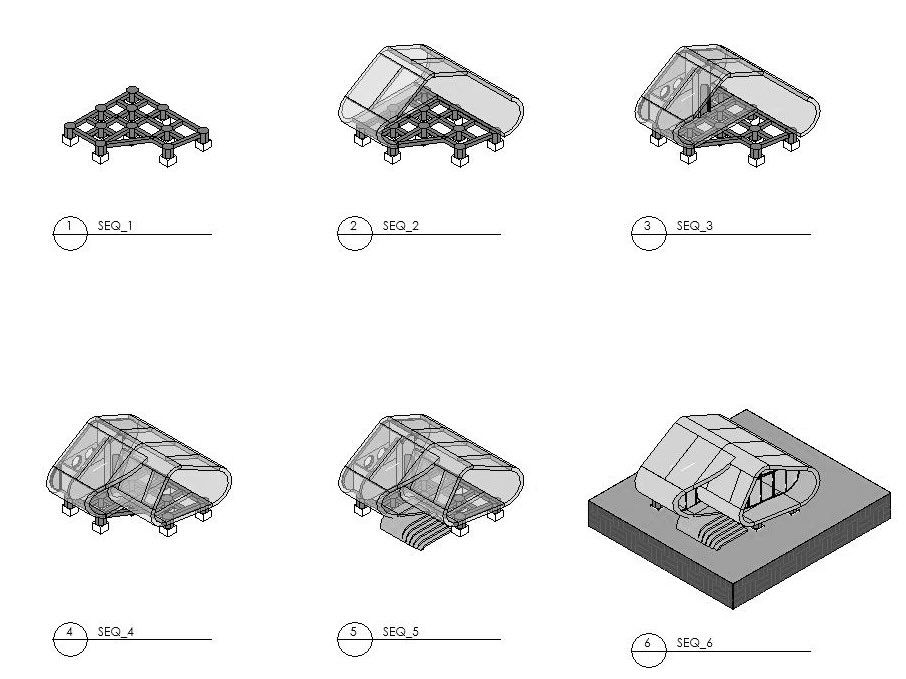 Inspiral Architecture and Design Studios Inspiral Architecture and Design StudiosThe shell of the structure stands on a footing of 1.2 meters high (about 4 feet), allowing for flood resistance and is easy to add-on additional wings for more space. Despite its diminutive size, the home emits a light and airy feeling with its light wood finish and mirrored wall. Built-in shelving helps solve storage issues, while steps lead to a bedroom loft overlooking the living space. The glass front can be fitted with large curtains to provide privacy. The bathroom and bedroom follows the same principle, combining practical layouts with design detail such as rounded windows and integrated cabinetry.  Courtesy of Inspiral Architecture and Design Studios Courtesy of Inspiral Architecture and Design StudiosThe first Drop Pod prototype has been installed in West Nusa Tenggara, Indonesia, and, if nothing else, it shows us that “prefab doesn’t have to mean boring”. We’ve reached out to Inspiral to inquire about the price, because it’s not listed online. See more photos of the home on their website… Stylish Prefab Home Can Be ‘Dropped’ into Flooded Areas or Anywhere Housing is Needed |
CES 2025: AI-powered tech to dominate world's biggest electronics trade show (2025-06-14T11:38:00+05:30)
 |
What’s the difference between probiotics and prebiotics? A dietitian explains (2025-05-24T17:14:00+05:30)
If you walk through your local pharmacy or supermarket you’re bound to come across probiotics and prebiotics. They’re added to certain foods. They come as supplements you can drink or take as a pill. They also occur naturally in everyday foods. You might have a vague idea that probiotics and prebiotics are healthy. Or perhaps you’ve heard they’re good for your “microbiome”. But what actually is your microbiome? And what’s the difference between probiotics and prebiotics anyway? First, some definitionsThe UN’s Food and Agriculture Organization, and the World Health Organization, define probiotics as “live microorganisms which when administered in adequate amounts confer a health benefit”. These microorganisms are the bacteria and yeasts in food such as yoghurt, sauerkraut and kombucha, and in supplements. But prebiotics refer to the “food” probiotics need to survive and replicate. Prebiotics are better known as dietary fibre. They include specific types of fibres called inulin-type fructans, galacto-oligosaccahrides, resistant starch and pectin. Prebiotics occur naturally in plant foods, are added to foods (such as bread and breakfast cereals) and come as supplements. Dietary fibre remains undigested in your stomach and small intestine until it reaches the large intestine. There, microorganisms (probiotics) break down (or ferment) the fibre (prebiotics), converting it into metabolites or nutrients linked to better health. How are they related to your microbiome?Both probiotics and prebiotics are said to encourage a healthy microbiome. That’s a healthy community of different microorganisms that live in or on your body. This includes those in the mouth, gut, skin, respiratory system and the urogenital tract (which handles urine, and has reproductive functions). Everyone’s microbiome is different and varies throughout your life. For instance, changing your diet, physical activity, hygiene, taking antibiotics or having an infection all affect your microbiome. These factors can change the diversity of your microbiome, that is how many different types of microorganisms you have. These factors can also alter the ratio of healthy microorganisms to unhealthy ones. When your microbiome is less diverse or when the number of unhealthy microorganisms outgrow the number of healthy ones, this is known as dysbiosis. This can lead to problems including diarrhoea or constipation, irritable bowel syndrome, bleeding gums, atopic dermatitis (eczema) or acne.
Probiotics and prebiotics are marketed as ways to support a healthy, diverse microbiome, and help to reduce the chance of dysbiosis. As taking antibiotics can alter your microbiome, they’re also marketed as a way of improving its microbial diversity when taking antibiotics or afterwards. Do probiotics work?The microbiome plays a crucial role in our health. For instance, a healthy microbiome has been linked to reduced risk of cancers, cardiovascular (heart) diseases, allergy diseases and inflammatory bowel disease. But how about taking probiotic supplements to boost your microbiome? A review of clinical trials looked at probiotic supplements in healthy people. It found no increase in the diversity of their microbiome. Another review of clinical trials looked at the impact of probiotic supplements while people were taking antibiotics. The diversity of their microbiome did not improve. Another study not included in these two reviews found probiotics could make microbial diversity worse in the short term. It found probiotic supplements delayed restoring the microbiome after taking antibiotics. What about prebiotics?
There have been few studies on the impact of healthy people just taking prebiotic supplements. However, there are studies of people taking prebiotics with probiotics on particular aspects of health. For instance, one large review looked at various neuropsychiatric outcomes, including dementia, Parkinson’s disease and mild cognitive impairment, when people took prebiotics and probiotics (together or separately). Another review looked at the effect of prebiotics, probiotics or synbiotics (supplements that contain both prebiotics and probiotics) on people with diabetes. But their findings are not conclusive. So we need more research to routinely recommend these supplements. They are also no replacement for standard medication and a healthy, balanced diet. So how do I keep my microbiome healthy?Naturally occurring probiotics and prebiotics are in everyday foods.
Probiotics are found in fermented foods such as cheese, sauerkraut, yoghurt, miso, tempeh and kimchi. Prebiotics are in the foods that contain fibre – all plant foods. It is important to have a variety of plant foods in your diet. This will ensure you get all the different types of fibre needed to keep your healthy bacteria alive, and to increase the diversity of your microbiome. Eating foods rather than consuming supplements also means you get the extra nutrients in the food. The Australian Guide to Healthy Eating recommends a diet rich in plant foods, and promotes eating fermented foods (in the form of cheese and yoghurt). This combination is ideal for maintaining a healthy microbiome. Evangeline Mantzioris, Program Director of Nutrition and Food Sciences, Accredited Practising Dietitian, University of South Australia This article is republished from The Conversation under a Creative Commons license. Read the original article. |

What are Veblen and Giffen goods? (2025-03-19T11:53:00+05:30)
This article is part of The Conversation’s “Business Basics” series where we ask experts to discuss key concepts in business, economics and finance. In economics, goods and services can be classified in different ways. You might be surprised to realise you already knew this, even without knowing their classification names. Most goods and services are what we call normal goods. Normal goods are those that you purchase more of as your income increases. For example, you might put healthier and more nutritious food in your trolley, buy more shoes and clothes, or spend more on outings at restaurants and events. Normal goods still abide to what’s called the law of demand, which might feel like common sense: as the price of something goes up, the quantity of or frequency with which it is demanded will fall. But there are some categories that violate our intuitions around supply and demand. And they do so for very different reasons. Meet Veblen and Giffen goods, the products that “break the rules”. Needs and wantsNormal goods can be further divided into two types: necessity goods and luxury goods. Broadly speaking, necessity goods are all those things we require for everyday life – food, housing, electricity and so on. Luxury goods, on the other hand, are those things we don’t necessarily need but are nice to have. Luxury houses, fancier cars, more expensive clothes and so on. We become more able to afford luxury goods as we earn more. But as a result, they are also the first things we tend to cut when our income tightens. For most of these products, something called the “law of demand” applies. That is, if their price increases, people buy less of them than they did before. Demand for them shrinks. However, some types of good defy this “natural” principle. Symbols of status and wealthThe first type are Veblen goods, named after American economist Thorstein Veblen. Sometimes they’re also called “snob” goods. When these goods go up in price, demand for them actually increases. Clear examples of Veblen goods are some forms of art, high-end designer clothes, exclusive cars and watches. The more expensive the good is, the more exclusive it is, and the more the consumers (who are attracted to it) want to purchase it. It all centres on signalling status. Being seen to be able to purchase them can indicate someone has exquisite taste, or lots of money to spend. Most times, Veblen goods are an example of what economists call “positional” goods. These are goods that are valued according to how they are distributed among people, and who exactly has them. The satisfaction of purchasing a Veblen good comes from the sense of having it and being able to show it off, not necessarily from how useful it is. Inferior goodsOn the opposite side of normal goods are inferior goods. As our income increases, we tend to consume less of these goods. Think, for example, of two-minute noodles or the bus service. As your income increases, you may be able to afford more nutritious and healthier food and stop consuming cheaper food. You may be able to purchase a car or a bike and stop using public transport. But within inferior goods, one rare kind offers another exception to the law of demand – Giffen goods. Why does a rise in price cause demand to go up? Because for people on limited incomes, this limits their ability to buy substitutes. Take examples such as wheat, rice, potatoes, or bread. If the price of any of these goes up, a consumer on low income may have less to spend on higher quality goods like meat and fresh vegetables, increasing their demand for the inferior good. María Yanotti, Lecturer of Economics and Finance Tasmanian School of Business & Economics, University of Tasmania This article is republished from The Conversation under a Creative Commons license. Read the original article. |

The Australian idea of a university (2024-12-26T14:45:00+05:30)
Glyn Davis, The University of Melbourne
This is a transcript of the 2013 Newman Lecture delivered on Wednesday at Monash University’s Mannix College. Let me quote a much-respected contemporary Australian scholar and philosopher, Raimond Gaita.
So philosopher Raimond Gaita argued the case for the unworldly university in his lecture “To Civilise the City?”. His deeply felt evocation of the purpose of a university proposed an institution that engages critically with the world, enriching both students and their society. Professor Gaita, of course, understands well the reality of contemporary campus life:
Not quite, I will suggest in this lecture. The unworldly university has always been rare. Professional training dominated Australian universities from their earliest expression. Students enrolled in the liberal arts and academics engaged in public debate have always been important on campus, but the dominant tradition is pragmatic and vocational. It was a path chosen early and reinforced by national policy, student choice, and academic values. Origins of an ‘Australian’ universityAlong with parliaments and police, literature and language, the idea of a university was imported to Australia with the first European settlers. This colonial inheritance was expressly British in character. Colonial records suggest little interest in developments such as the new research universities of Germany or the land grant institutions of the United States. Instead, local debate circled around a smaller set of concerns – which British traditions would work best for an Australian university? There were relatively few graduates in the colonies to guide discussion, and much scepticism about whether a university was required. People could always sail home to England for higher learning as William Charles Wentworth did in 1816 to attend Cambridge. Yet practical considerations pressed as the prosperous new colonies faced shortages of trained professionals in engineering, law, medicine and other specialist fields. Largely organised by Wentworth, from the 1840s, a group of Sydney notables pressed for a campus. The model they proposed reflected British arguments of the era. The ancient universities of Oxford and Cambridge, with their focus on literary, philosophical and Mathematical “Greats’ of the Western canon argued for a liberal education. Yet the Oxbridge ideal held significant drawbacks: it would not provide the professionals required in the colonies, while the close links between the ancient universities and the established church made the model unacceptable in a colonial society riven by tension between Protestants and Catholics. There were other models to consider. British debate about higher education focused on expanding the subjects offered in universities, and opening the institutions to a broader spectrum of society. As John Stuart Mill would tell graduates at St Andrew’s University in 1867, until recently the old English universities "seemed to exist mainly for the repression of independent thought, and the chaining up of the individual intellect and conscience”. Yet within a few years, noted Mill (in language idiomatic of that era), these universities had been transformed into “the great foci of free and manly inquiry”. This transformation was led by the establishment in 1826 of the University of London, under the intellectual influence of Jeremy Bentham and James Mill. London University offered higher education to those excluded from Oxbridge by faith or low income, particularly Nonconformists, Catholics and Jews. The new institution taught in fields other than classics and ancient languages, and stressed the importance of education for the legal and medical professions. It broadened the traditional formulations of a liberal education by allowing female students to study “modern science, modern languages, the major branches of philosophy, and political economy”. In addition, the University taught engineering, mechanics and chemistry. Only one popular branch of higher learning was excluded: there would be no classes in theology. Soon enough, London University spawned a competitor, set up by dignitaries such as the Duke of Wellington who opposed the idea of a “godless university”. Established in 1829 as an Anglican institution, King’s College London accepted the logic of a broader curriculum, though not one that excluded religion. The rivalry did not last long; in 1836 London and King’s joined under the umbrella of University College London to offer a wider variety of instruction, with a prominent role for professional education in a largely secular setting. The example of University College London would influence Australian practice. Even more significant were developments in Scotland and Ireland. In Edinburgh, the Scottish Enlightenment crafted universities as non-residential and non-sectarian institutions, with provision of education on merit. The Scottish universities differed from their English counterparts with large classes rather than the individual teaching provided at Oxford and Cambridge, and attention to a broader group of disciplines than the classics. Scottish innovations such as the honours year would be imported to Australia. In Ireland, three new institutions were created in 1845 as Queen’s College Belfast, Queen’s College Cork and Queen’s College Galway: all were established as secular institutions with a strong focus on the professions. Though both Catholic and Protestant leaders condemned these “godless colleges”, the institutions drew enthusiastic students from across Irish society. For Irish Catholics, long discouraged back then from attending Trinity College in Dublin, the new institutions provided opportunity and new intellectual horizons. However, not all Catholic academics welcomed the development. In 1852, John Henry Newman published his influential The Idea of a University. Newman’s ideal institution is collegiate, literary, residential and liberal. It is a vision hostile to the new Irish and British universities, and opposed to research as an element of higher learning, as embodied by Wilhelm von Humboldt’s University of Berlin. Newman spoke against the spirit of his times. The college he established to implement his ideas proved a financial failure, and eventually it was absorbed into University College Dublin. More influential voices of the era were pressing hard the case for expanding access and curriculum, and for introducing research into higher education. Herbert Spencer published Education in 1861, and FW Farrar his Essays on a Liberal Education in 1867, the year John Stuart Mill presented the inaugural address at St Andrew’s University. In 1868 Thomas Huxley produced his essay A Liberal Education, and where to find it. Not at Oxford and Cambridge apparently. Huxley dismissed both as “simply "boarding schools” for bigger boys". British universities, he argued, must embrace research as the basis of great university education. At present, he lamented “a third rate German university turns out more produce of that kind…in one year, than our vast and wealthy foundations elaborate in ten”. Colonial legislators in New South Wales framed local proposals for a university in the mould of liberal reformers such as Spencer and Mill. William Charles Wentworth, now a barrister, newspaper proprietor and politician, pressed the case in the Legislative Council. He and his allies conceived of a local university as a secular institution outside the direct control of both the colonial state and church. It would be a public institution, established by government and funded both with state money and private donation, levelling fees from students but offering scholarships for deserving candidates who could not afford a place on campus. Proponents were optimistic that the fledgling university could produce:
Legislation creating the University of Sydney was passed in 1850. It adopted the principle of institutional autonomy. A senate would govern the institution, initially with 16 appointed Fellows. All were men, and their educational background was richly suggestive of the mix of influences underpinning the first Australian university - five foundation Fellows had no university education, five were Cambridge graduates and one from Oxford. Three had attended Trinity College Dublin, and two Edinburgh. From inception the University of Sydney borrowed from across British and Irish tertiary practice. In appearance and early curriculum, the influence of Oxford and Cambridge was clear. Yet Sydney drew also from the newer universities in curriculum and aspiration. The University offered entry without religious qualification to those who passed an examination.14 Classes were organised around the lecture and tutorial model familiar in Scotland and Ireland, with professors rather than tutors as the principal teachers. As in Scotland, the University opened admission to a wider social demographic, typically living at home and travelling to campus for classes. As in Ireland, the new institution would develop in time strong professional programs in medicine, law and engineering. The model informing the University of Sydney offers an amalgam of universities from Edinburgh and London to Dublin, with architectural hints of Oxford and Cambridge in its design and a motto (sidere mens eadem mutato) to stress continuity with British origins. This new institution would become the model for all later Australian higher education – an autonomous, professional, comprehensive, secular public and commuter university. In 1853, the University of Melbourne followed Sydney. The idea for a second university on the Australian continent grew in part from inter-colonial rivalry. Victoria had just separated from New South Wales, as Melbourne boomed following the discovery of gold. Championed by Redmond Barry, a judge of the Supreme Court of Victoria and a leading member of fledgling Melbourne society, the new university would add to the esteem and civility of a newly wealthy colony. The university was established without much pomp or procession. A bill was drawn up for the Legislative Council in January 1853, and received royal assent within weeks of drafting. The University Council, announced by Governor La Trobe in April 1853, was populated with graduates of Oxford, Cambridge, Trinity and Edinburgh. Again, university governance emphasised professional skills found among the local political and social elite. Clerics were few and far between, though the Council adopted an ecumenical approach to governance by inviting the Anglican and Catholic bishops of Melbourne to join the governing body. As at London University, religious instruction was excluded. The Act to establish the University of Melbourne required the institution be “open to all classes and denominations of Her Majesty’s subjects”. The University would be a state-initiated entity, required to report to parliament each year. There were some differences between the new institutions. Melbourne University’s founders would choose more austere architecture – sombre Scottish ecclesiastical stonework against the exuberant gothic revival of Sydney’s original building. Legislation differed in detail, and while both universities quickly embraced professional studies, Melbourne moved with greater speed to create vocational faculties, with Law (1857), Engineering (1861) and Medicine (1862) all operating within a decade of foundation. Yet taken overall the governance, funding, and role in society of the two institutions was strikingly similar. The new universities reflected analogous influences and adopted a similar organisational form and mission. In turn, they would influence the next generation of institutions. The Province of South Australia established the University of Adelaide in 1874 using the same model. The Act of Incorporation for the University of Adelaide mimicked key tenets from legislation in Sydney and Melbourne, creating a non-sectarian institution governed by an independent council empowered to award degrees. Hobart gained a university in 1890, Brisbane in 1909 and Perth in 1911. Each university was established by an act of parliament based on the now dominant Australian model. The new institution would be given land and funding by the state to support a non-sectarian and self-governing institution. Though residential colleges would be established in time, most students would commute to campus, complete a single undergraduate degree, and leave for a life in the professions. A standard model does not imply a static, stable world. On the contrary, universities proved lively places. Arguments on governing boards found their way into the metropolitan media. The role and rights of professors provided rich copy; an exasperated Sir John Monash, after serving as Vice-Chancellor at the University of Melbourne, declared bitterly that he found it easier to organise an army on the Western Front than to run a university. Through their first century, Australian universities grew as new disciplines found a place in the curriculum. This was often a controversial journey, with long arguments over whether dentistry or nursing, media studies or creative writing, deserved a place on campus. From the late 19th century, research became an established part of the university mission. Australia may have adopted predominantly British notions of a university, with an academic career focused on teaching, but in time the important technological innovations of German and American institutions, and a rising international interest in scientific research, proved influential. Research laboratories appeared around campus from as early as the 1870s, and over time a research qualification would be required for academic employment. Research would become universal, adopted by every institution as part of the standard Australian model. Difficulties leaving the pathAs the first Australian universities approached their centenary anniversaries, voices argued for more diversity. There were calls for further institutions in Sydney and Melbourne, a growing interest in creating regional universities, and advocates for a national university based in Canberra. Argument for a federal university began in the 1920s influenced by American research institutions such as Johns Hopkins in Baltimore, which did not teach but focused on high quality research. Implementation would be delayed by economic depression and war, but by 1944 a substantive proposal for the university was complete. It became the Australian National University (ANU) in 1946. The new institution would be very different from existing universities, with a specific mission to “encourage, and provide facilities for, post-graduate research and study, both generally and in relation to subjects of national importance to Australia”. However, within a decade ANU had merged with the undergraduate Canberra University College. It acquired the familiar arts, science and professional programs of other Australian universities. The ANU was the first of several attempts to create new institutions with a unique mission. During the long boom following the Second World War, science and technology became policy priorities. Politicians talked of new universities specialising in research and training of scientists, technicians and engineers. The New South Wales University of Technology was the first commitment to a tertiary institution with an explicit science and technology character. As with ANU, the new institution retained many of its founding features but moved toward the wider Australian university tradition. The exclusive focus on science and technology lasted only a few years. A Faculty of Arts and a Faculty of Medicine began in 1960 following recommendations in the Commonwealth Government’s Murray Report, which observed that “it must be expected that the NSW University of Technology will assume many of the features of a traditional university”. With a new name (the University of New South Wales) and a faculty complement that now included law, a distinctive original mission was replaced with a more comprehensive, traditional profile. A similar story played out in Victoria. Again, the state government embraced the idea of a new technically focused institution. The idea faced both political and bureaucratic opposition. As Member for Albert Park, Mr Sutton, told the Victorian Parliament:
He urged instead the establishment of an institution focused on “the pursuit and passing on of wide general knowledge and for research animated by a passion for truth.” In 1961, Monash University enrolled the first 347 students but just five year later it had over 6,000 students across in a wide variety of disciplines. Strong in science and engineering, as originally promised, Monash had also become another comprehensive institution in the Australian mould. The lack of genuine differentiation disappointed many who championed a different approach. At a 1965 seminar on the future of higher education, the first Vice-Chancellor of Monash, J.A.L Matheson, is rumoured to have said the following:
There are, of course, worse disappointments in life. The 1960s provided further opportunities to challenge the Australian idea of a university. A sustained period of founding new universities began with Macquarie in 1964, and within 20 years included La Trobe, Newcastle, Griffith, Deakin and Murdoch. As foundation Vice-Chancellor of Flinders University, Peter Karmel, told a meeting at the Adelaide Town Hall: “we want to experiment and experiment bravely”. Yet over time familiar patterns returned. What began as radical departures began to take on the degree structures, teaching practise and governance structures of Australian orthodoxy. The past and the future of Australian universitiesThis lecture offers a historical note about a commonly encountered narrative of decline and loss in universities. It suggests significant continuity in Australian tertiary institutions, and argues the power of foundation ideas in shaping that pattern. Institutional choices adopted by the original founding communities are reinforced by policy, by student preferences and by academic values. Over more than a century and a half, the incentive to remain close to the original idea has proven compelling, defeating even legislated initiatives to create diversity. As a result, Australian higher education is dominated by autonomous, professional, comprehensive, secular, public and commuter universities sharing very similar missions. More than 150 years in the making, this model has a powerful hold on the public imagination. Yet we may be approaching the end of its influence. The new element is the market – exactly the pervasive influence that Professor Gaita fears – turning students into customers and universities into enterprises. For the Australian model to date has relied on public funding to sustain institutions. As student contributions rise, and government funding falls as a percentage of overall income, so universities are forced to make market decisions. This introduces a new logic into the choice of disciplines, selection criteria for entry, even the economics of commuter versus residential students. In a market, increased numbers of private players can open campuses, some with an explicitly religious character. For 20 years, Australian universities have worked simultaneously in two worlds – one public, highly regulated, and deeply constrained, the other international and more like a private market. The first is the world of domestic undergraduates, where Canberra sets strict rules about price and entry. The second is the market for international students, where universities can make choices about where to recruit, what to charge, whether to operate within Australia or set up offshore. Not surprisingly, the world of domestic students remains largely undifferentiated. Australian universities offer a very similar array of programs to domestic students, with no price competition allowed. Only in the global market has real and important difference emerged. Required to make independent strategic choices, universities differ greatly in their approach. A number prefer large offshore operations, as teaching programs or with an overseas campus that reproduces the ambiance and values of the home institution. Others run an on-shore strategy, working with feeder schools, international agencies, foundation colleges and other players to build significant international revenue. A few universities have changed their entire curriculum in an effort to orientate themselves toward graduate education for Australian and global students. Pressures for change necessitate urgent reflection on the role and purpose of a university. Professor Gaita has expressed eloquently his concerns about the trajectory of Australian institutions. His call to 10 arguments is timely. For though the Australian tradition has endured with little change to date, stately progression along a deep path may halt abruptly under commercial pressures. Markets end the incentives to uniformity. They require diversity, since not every institution can occupy the same niche. Markets reward innovation and punish the slow-moving. They destroy and build simultaneously. On current Commonwealth funding rates no Australian public university can survive without a strong international cohort. As a result, innovation is transforming the singular Australia idea of a university. As the market approaches, the familiar road comes to an end. An extended version of this argument will be published in a forthcoming edition of Meanjin. Glyn Davis, Professor of Political Science and Vice-Chancellor, The University of Melbourne This article is republished from The Conversation under a Creative Commons license. Read the original article. |
