A wearable product named AI Pin is an innovative device that has been creating quite a buzz in the last 24 hours. AI Pin is essentially a small, wearable device, packed with advanced technology. The AI Pin, a groundbreaking wearable device, was launched by Humane, a startup based in San Francisco. This innovative company was founded by two former Apple employees. They have managed to secure backing from tech giants like Microsoft and OpenAI, the developer behind ChatGPT. The AI Pin, representing a significant leap in wearable technology, is Humane’s first product and showcases the potential to transform how we interact with technology in our daily lives. The AI Pin isn’t just any wearable tech. It stands out for its multifunctionality. It’s like having a personal assistant pinned to your clothing. With AI Pin, users can enjoy hands-free communication, access to information, and even interaction with other smart devices. It’s designed to understand and respond to voice commands, making it incredibly user-friendly. One of the biggest draws of AI Pin is its potential to make life easier. For starters, it can provide quick answers to questions, manage schedules, set reminders, and even help navigate places. Think about being in a new city and having a guide right with you, providing directions and local information without needing to pull out a phone. But can it replace smartphones? That’s a bit of a stretch at this point. While AI Pin offers convenience and ease of use, smartphones are still more versatile. They have larger screens, better multimedia capabilities, and a broader range of applications. However, AI Pin is a step towards a future where we might rely less on traditional gadgets like phones. As of now, AI Pin is a glimpse into the future of wearable technology. It’s not just about the convenience it offers but also about how it represents a shift in how we interact with technology. It’s a move towards more integration. With such innovations, it’s exciting to imagine what the future holds in the realm of technology and personal devices, Humane Innovates Wearable Device ‘AI Pin’ To Replace Smartphones
Without a government body to legislate the result, UK education authorities have discovered that over 90% of national schools have instituted smartphone bans, a measure still being debated by industry members and scientists.
Representing a triumph of distributed sovereignty, a survey of more than 15,000 schools found that 99.8% of elementary schools and 90% of middle schools had instituted some form of ban, the Guardian reports.
The paper further claimed that education leaders in the UK have largely supported school autonomy and guidance rather than government regulation on the question of smartphones, and the schools seem to have used that autonomy quite decisively.
Current Education Secretary Bridget Philipson said that the results of the survey represents “comprehensive evidence,” that “shows our approach of backing headteachers to implement bans in their schools is working.”
Individual school action has showed before that prohibiting smartphone use in schools, or at least while classes are in session, can improve student performance. Some classes used tablets and phones as teaching materials, and such usage wasn’t included in the survey findings of device usage.
“A lot of this is about a battle for attention, a battle for focus and concentration. It’s not just about having your phone out and using it, it’s the mere presence of the phone,” Tom Rees, chief executive of the Ormiston academies trust, one of the largest private school businesses in the country, told the Guardian.
“There’s evidence that tells us that even if your phone is in the same room, it could be in your bag or pocket, your brain is leaking attention, still thinking about it and being drawn to it, wondering if there has been a notification on it and what it might be.”
Ormiston was the first academy chain to go smartphone-free,
Justine Elbourne-Cload, co-chair of the St Albans primary schools consortium, the first institution in the country to implement a total smartphone ban for under-14 age groups, said that parents’ reactions had been “phenomenal.”
“They are really onboard. Parents are crying out for that support.”
In the United States, policies on phone usage are being left up to the states, and several have already implemented some forms of restrictions.
In Delaware, Pennsylvania, and Arkansas, governments have allocated grant money to any school district that wants to begin controlling smartphone and device usage by closing them away in secure pouches or boxes at the beginning of lessons.
Florida and California have passed prohibitions already, with the latter mandating its effect by the end of the next school year (July 1st). Ohio, Virginia, Minnesota, Indiana, and Louisiana have all passed measures that compel schools to come up with their own programs and methods for reducing, controlling, or eliminating smartphone and device usage during school hours or in classrooms.
Several other states, including Washington and Alabama, have taken a lighter touch, passing non-binding measures that encourage schools to take action, rather than mandating it.“The research is clear: Reducing the use of cellphones in class improves concentration and learning, improves mental and physical health, and reduces pressures caused by social media,” said Washington schools superintendent Chris Reykdal in an official guidance document. More Than 90% of Schools in England Ban Smartphone Use, 13 US States Have Already Taken Action
Giving children an instrumental music education can be expensive. In addition to purchasing an instrument and paying the cost of music lessons, parents invest their time by encouraging practice, attending recitals and driving their child to and from lessons. Parents rightly want value-for-money and confidence that their child’s teacher employs an evidenced-based, proven teaching method.
There are numerous approaches to teaching music, each with its own philosophy and history. To a parent looking to make an informed choice about music lessons, the options can be befuddling. But given the research highlights parental involvement as an important component for a successful music-learning experience, developing an understanding of the teaching method is vital.
One method that polarises the music education community is Shinichi Suzuki’s (1898-1998) “talent education” (saino kyoiku), commonly known as the Suzuki method. It was first conceived as a system for teaching the violin. The Suzuki method arrived in Australia in the early 1970s and was quickly applied to a variety of instruments.
Research highlights a range of positive outcomes for children learning how to play an instrument via the Suzuki method. It also shows Suzuki is not the only method that works. While the degree of parental involvement may mean Suzuki is not right for every family, the caring learning environment it encourages is one worth emulating.
What is the Suzuki method?
Shinichi Suzuki playing the violin.
1. Talent is no accident of birth
The Japanese word saino has no direct English translation and can, in context, mean “talent” or “ability”. Shinichi Suzuki believed talent is not inherited, and any child could excel musically, given the right learning environment.
Today, advocates of the method continue to echo Suzuki’s idea that “the potential of every child is unlimited”, and caring learning environments help children unlock that potential.
2. All Japanese children speak Japanese
Suzuki credited the development of saino kyoiku to the realisation the vast majority of young children naturally and easily develop language skills. By examining the experiences that facilitate language development (including listening, imitation, memory and play), Suzuki devised the “mother-tongue” method for early childhood music education. Children can begin their music education from birth through listening, and can start learning an instrument from as young as three years old.
In contrast to some Western approaches to music teaching, reading music notation is not prioritised and is delayed until a child’s practical music ability is well established. In the same way a child generally learns to talk before learning to read, students of the Suzuki method start by listening to and imitating music rather than sight reading sheet music.
3. Character first, ability second
Taken from the motto of the high school Suzuki attended until 1916, “character first, ability second” is the overriding aim of the Suzuki method. In saino kyoiku, music learning is a means to an end: students are taught an instrument to facilitate them becoming noble human beings.
Some students of the Suzuki method have undoubtedly progressed on to a career in music. But creating professional musicians and celebrating child prodigies or virtuosos is not a priority of the method.
4. The destiny of children lies in the hands of their parents
The Suzuki method requires a major contribution from a parent and a home environment that wholeheartedly embraces the child’s music-making. A parent needs to participate in formal lessons, record instructions from the teacher and regularly guide and monitor practice at home.
The learning process is a three-way relationship between the child, the parent and the teacher. The parent becomes a “home teacher” who helps their child develop new skills, provides positive feedback and guides the content and pacing of practice sessions. The benefit of having a parent-mentor at home is the feature that sets Suzuki apart from other teaching methods. The parent can greatly regulate time spent practising and what they do during practice.
Some music teachers have criticised the Suzuki method for teaching children to a high level at an earlier age than usual, for an over-reliance on rote learning, for robotic playing, for a focus on classical music, and for a lack of engagement with music notation and improvisation.
What does the research say?
The research into music education supports many aspects of the Suzuki method. For example, one study that sought to compare different modes of parental involvement in music lessons found a clear benefit from parental involvement. This benefit was not limited only to the Suzuki method. The message from this study is: the more interested the parent, the better the learning for the child.
Another study compared Suzuki’s approach to teaching rhythm with the BAPNE method (Body Percussion: Biomechanics, Anatomy, Psychology, Neuroscience and Ethnomusicology). The study concluded both methods had merit and should be integrated.
A recent thesis from the University of Southern Mississippi compared the Suzuki method with the method of its fiercest critic, the O’Connor method.
The O’Connor method is an American system where a set of music books are sold to teachers and students, and training to accredit teachers. These books are tailored to different levels of ability.
This method is less focused on parental involvement in teaching and the selection of music is more geared towards American music. The study found the two approaches could both be effective and shared common aspects related to technique, expression and the mechanics of learning the violin.
The thesis does claim the O’Connor method embraces a more diverse musical repertoire. But the modern Suzuki organisation says its teachers have more flexibility in incorporating different styles of music.
Finally, a study out of South Africa highlights ways the Suzuki method can be adapted for use in different cultural contexts. The authors examined the challenges associated with Suzuki’s requirement for high levels of parental involvement for orphans and children from low-income and single-parent families.
These challenges could be overcome by a community approach to music education. In a group learning setting, older and more advanced students mentored younger, less advanced students and provided the encouragement and guidance otherwise provided by a parent.
Some aspects of the Suzuki method remain steeped in controversy. There is no reliable evidence to support the idea that musical training improves character and a sizeable body of research contradicts the notion that genetics has no role in musical aptitude.
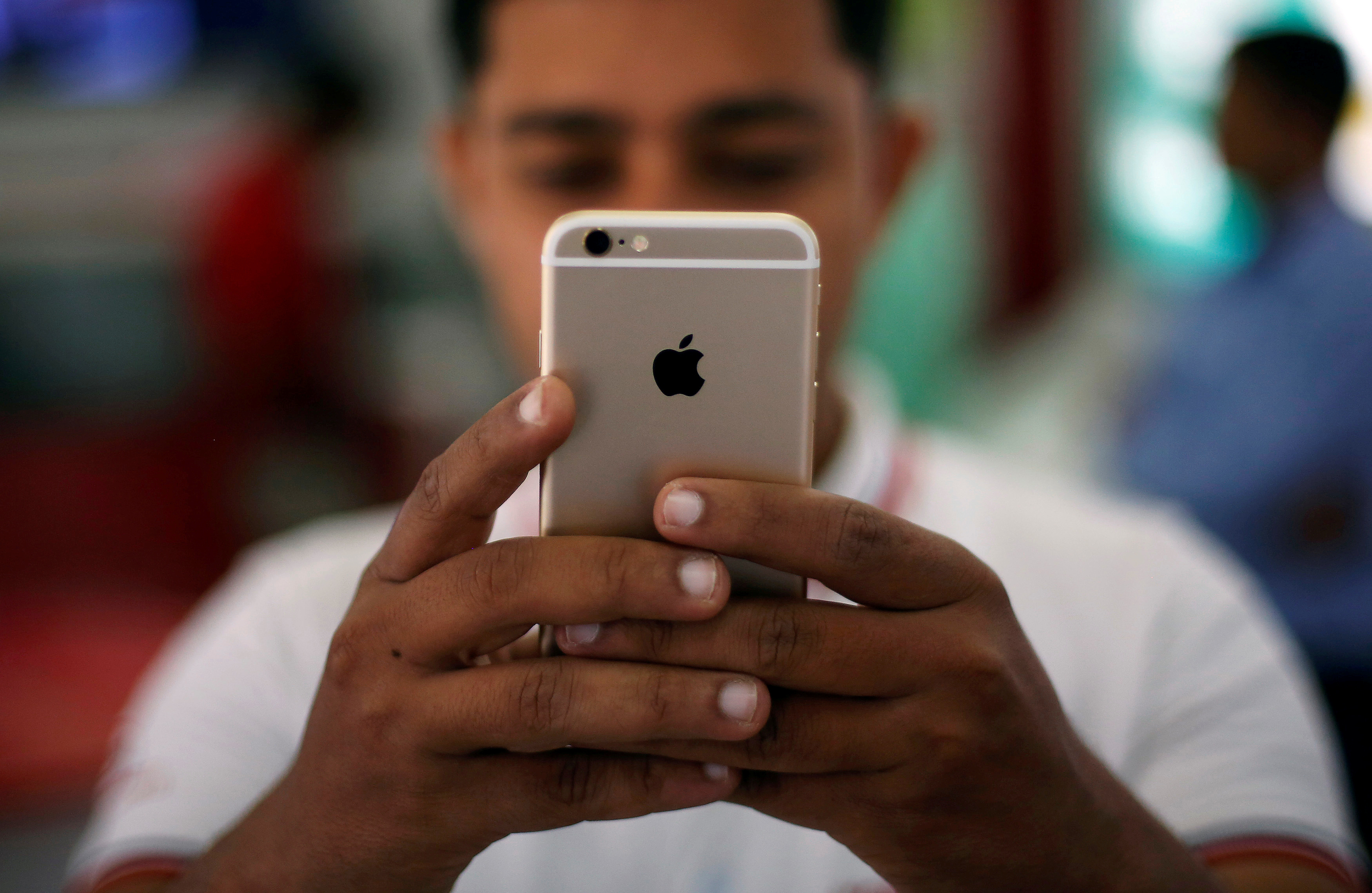
FILE PHOTO: A salesman checks a customer’s iPhone at a mobile phone store in New Delhi, India, July 27, 2016. REUTERS/Adnan Abidi/File Photo
If there’s just one question I’ve heard the most over the years, it is: “I’ve had [insert gadget name here] for [usually not a long time] – should I get the new one?” Oftentimes, that question is born of honest curiosity – someone really wants to know if the promises a company has made about some new product are worth buying into. Other people, however, have already made up their minds about buying something new and are just looking for someone to validate their choices. No matter why people ask, though, my answer is almost always the same: If it isn’t seriously broken, and you got whatever it is less than two years ago, don’t even think about replacing it. That’s my golden rule for gadget shopping, and I admit it sounds like a pretty obvious rule of thumb. But as long as companies churn out new smartphones, laptops, wearable gadgets and more for sale each year – and then advertise them like crazy – it can be a little too easy to splurge on an upgrade that may not move the satisfaction needle for you. Our advice: Resist that temptation whenever you can. Not only will your bank account thank you, but the upgrade you do invest in down the road also is likely to feel fresher and more capable because you’ve allowed for the underlying technology to mature further before embracing it. As straightforward as my rule is, there are a few things about it that we should unpack, such as why the threshold is two years, and what qualifies as “seriously” broken. Barring accidents and, say, defects stemming from production, the first year with a new gadget is likely to be your best year with it. And by the time you tiptoe past the first anniversary of your purchase, you’ve probably built up some considerable experience with it – which means you have a pretty good sense of how well it’s supposed to run. Keep that baseline in mind as you continue using your device. In my experience, it’s after the second year that things you may have taken for granted before – like performance or battery life, if the gadget in question has a battery – can really start turning south These kinds of consumer gadgets receive software and security updates for more than two years; in fact, it’s not uncommon for products from companies including Samsung and Apple to receive four or more years of updates. The hardware, by comparison, may struggle to last as long. That’s not to say a phone, laptop or a smartwatch will suddenly go batty after two years; the process is usually much more subtle than that. Hang onto a device long enough, though, and you’ll hit a point where it runs too slowly or the battery doesn’t last long enough for your comfort. It’s only after that point that we’d recommend you think about upgrading – or if possible, repairing – your device. What makes a device ‘seriously’ broken? Let’s say that you have a smartphone that does everything you want it to and that you’ve been satisfied with everything about it except its battery life. It wasn’t always this way, though; early on, you could count on your phone to last full days, but now it barely gets you through lunchtime. Is it worth upgrading then? We don’t think so. The details will depend on your phone’s model, but you can generally expect to pay $100 (plus tax) or less to get a genuine replacement battery installed. You could spend even less if you felt like taking a stab at the process yourself. (I spent a weekend not too long ago dismantling old Samsung phones to remove their old bloated batteries, a process that wound up being way more pleasant and contemplative than I expected.) Paying $100 or so to fix your phone’s biggest issue isn’t nothing, but it’s a fraction of what a brand new model would cost you. If the problem is a little more complicated, such as a shattered screen, expect potential repair costs to go up a bit. Apple’s estimates for out-of-warranty screen replacements range from $129 for aging devices like the 2016 iPhone SE to about $379 for the iPhone 14 Pro Max. Even at the high end, those costs still may make a repair a better choice than a full-on upgrade if you’re satisfied with everything else. I’d consider a device to be “seriously” broken – and therefore worth considering writing off – only once the potential repair costs hit 50 percent of the cost of a new model.At that point, do whatever feels right for you and your budget, and don’t forget to recycle, trade in or upcycle that older device once you’ve done with it.Tempted by a new gadget? Keep the golden rule in mind before buying
Google Inc. [CC BY 3.0 (http://creativecommons.org/licenses/by/3.0)], via Wikimedia Commons
Google's Android mobile operating system (OS) grabbed a record market share in the third-quarter at the expense of Apple's iOS which posted a decline, according to new research. Android captured 87.5 per cent of global smartphone market share in the three months to the end of September, Strategy Analytics said in a report. This means that nearly nine out of 10 smartphones in the world run Google's OS. Shipments of Android devices hit 328.6 million, up 10.3 per cent year-on-year. Meanwhile, Apple shipped 45.5 million iPhones, down 5.2 per cent from the 48 million in the same period last year. This was confirmed in Apple's latest earnings results, which showed the third straight quarter of declines for iPhone sales. Apple iOS market share stood at 12.1 per cent in the third quarter, down from 13.6 per cent the year before. Other mobile operating systems including those made by BlackBerry, Microsoft and Samsung's Tizen "have all but disappeared" and collectively make up just 0.3 per cent of the total smartphone market. The growth of Android has been driven by the rise of low-cost vendors in countries such as China using the OS, but it could face challenges ahead. "Android's leadership of the global smartphone market looks unassailable at the moment. Its low-cost services and user-friendly software remain attractive to hardware makers, operators and consumers worldwide," Woody Oh, director at Strategy Analytics, said in the report. "However, several challenges remain for Google. The Android platform is getting overcrowded with hundreds of manufacturers; few Android device vendors make profits, and Google's new Pixel range is attacking its own hardware partners that made Android popular in the first place." Google released two devices last month – the Pixel and larger screen Pixel XL – in one of its biggest hardware pushes to date. At the time, analysts said that the search giant could risk antagonizing manufacturers reliant on its mobile OS. The fall in Apple's iOS shipments was expected but it's important to remember that the flagship iPhone 7 released in September was only on sale for a short time in this quarter and analysts are expecting an uptick in sales for the three months to December. Source: domain-b.com
New Delhi: Domestic mobile handset maker Intex Technologies on Friday launched a new entry-level smartphone "Aqua Eco 3G" for Rs 2,400. The 3G-enabled, 4-inch smartphone offers dual core Mediatek chipset processor along with 256MB RAM and up to 32GB expandable memory. "With Aqua Eco 3G, Intex has brought yet another feature-rich affordable smartphone targeting markets beyond big cities," said Unnikrishnan Mohandas, Product Head-Mobiles, Intex Technologies in a statement. The dual-SIM smartphone also offers 0.3MP primary and secondary camera along with dual LED flash. The device is available in black, white and blue colours across leading retail stores. Intex Aqua Eco 3G launch came ten days after Intex launched a device with 3D-content functionality and in-house feature at Rs 4,699. "Cloud Q11" features an in-house unique feature "LFTY - Experience the New Left" that provides a seamless cohesive mix of multi-category content and value addition to end users on the left screen. The 3G-enabled smartphone which comes with 5.5-inch HD display of 1280x720 resolution is powered by a 1.3 Ghz Quad-core Mediatek processor along with 1GB RAM, 8GB ROM and 32GB expandable memory coupled with the latest Marshmallow, Android 6.0 operating system. Source: ummid.com
San Francisco: With an aim to lead the world of smartphones with its artificial intelligence (AI)-based technology, Google on Tuesday launched much-awaited Pixel -- a new premium device completely designed by the tech giant -- at a special event here. The launch also ended the Nexus branding under which the company has always released phones in partnership with other original equipment manufacturers like LG (for Google Nexus 5) and Huawei (for Google Nexus 6P). Although HTC has manufactured the smartphones, the new devices bear Google branding. With curved edges and a unibody made up of combination of aluminium and glass, the device comes in two sizes -- 5 and 5.5-inch with super AMOLED displays -- and is available in quite black, very silver and limited edition really blue colours. Pixel is first smartphone with Google Assistant -- a built in AI programme that works as an intelligent personal assistant and knowledge navigator. So now just ask questions, tell it to do things. With the highest ever DxOMark Mobile score of 89, Pixel's 12.3MP rear camera with f/2.0 click stunning photos in any light conditions -- #Nofilter needed. Catch action shots as they happen with Smartburst, which takes a rapid-fire sequence of shots. Use Lens Blur to achieve shallow depth of field and bokeh effects, making your subject pop. Google is offering free and unlimited online storage for photos and videos -- in original quality. Google's video calling app Google Duo comes preloaded on the devices. The device also has Pixel Imprint -- the fingerprint scanner on the back of the smartphone for quick access to all apps, texts and e-mails. Catering to the demand of a large battery that not only charges fast but also lasts all day long, Pixel devices come with 2,770 or 3,450 mAh battery packs that can give up to 7 hours of charge in just 15 minutes. It comes with a Type-C charging port and has retained the 3.5mm headphone jack. The device has a Bluetooth 4.2. With powerhouse specifications, both the devices have similar hardware under the hood. Pixel smartphones are fitted with Qualcomm's latest Snapdragon 821 Quad core (2x 2.15 Ghz and 2x1.6 Ghz) processors, 4GB LPDDR4 RAM and run on Android Nougat 7.0 operating system that was launched in August. The devices are available for $649 and up for pre-order in the US, Britain, Canada, Germany and Australia. The device will be available in India from October 13.Source: ummid.com
Left to right - Alexander Borisov, Mikhail Bebishev and Evgeny Fedorov in Kazan. Picture: InnoSoft
By Vladimir Chubarov, Forget your old-fashioned ways of preventing frostbite when its minus 20C and lower. It is neither a hot drink nor a shot of vodka - a team of Siberian programmers have suggested their own way of warming you up in the cold, and won a recent 'Hackathon' competition in Kazan. The idea of making a hand-heating app came when programmer Maxim Chavlytko, 23, from Krasnoyarsk 'InnoSoft' company made a mistake while working on another project, which led to his phone dramatically heating up. So when they needed an idea for the contest, they decided to a offer a saviour for anyone caught outside with no (or useless) gloves, which has happened to us all. The app called Warm Beams is run on a Smartphone, and turns it into the modern equivalent of a hot water bottle in your hands in the perishing cold. Out of 26 teams, the 'InnoSoft' took first place and got Android tablets, special prizes from a venture fund, and the right to be first in line for places at a business-incubator. The app needs further development before it can be tested on the market, and rookie students have been hired to finesse it. 'We really enjoyed working in a rush. Sometimes we need to work that way, because it helps to keep us in good form,' said team leader Alexander Borisov, 30. His team have earlier made an app for the Krasnoyarsk Economic Forum, which helped participants find information about it, and developed a system for booking taxis. They are now working on a ride-sharing app linking drivers and passengers in real time. Source: http://siberiantimes.com/
Los Angeles: Scientists have developed an app that crowdsources ground-shaking information from smartphones to detect earthquakes and eventually warns users of impending jolts from nearby quakes. MyShake, developed by researchers at University of California, Berkeley, runs in the background and draws little power. For now, the app only collects information from the accelerometers, analyses and relays the info and the phone’s Global Positioning System (GPS) coordinates to the Berkeley Seismological Laboratory in California for analysis. PTI, New form oflight discovered: London: Scientists have discovered a new form of light, which will impact the understanding of the fundamental nature of light. One of the measurable characteristics of a beam of light is known as angular momentum. Until now, it was thought in all forms of light the angular momentum would be a multiple of Planck’s constant — the physical constant that sets the scale of quantum effects. Now, researchers from Trinity College Dublin’s School of Physics and CRANN Institute have demonstrated a new form of light where the angular momentum of each photon (a particle of visible light) takes only half of this value. PTI. Microchip helps reunite UK dog with owners: London: A 13-year old dog in the UK was reunited with its owners five years after it went missing, thanks to a microchip fitted to the canine that disclosed its identity. Eddie, the Yorkshire Terrier, vanished from a garden while staying with its owners’ relatives in North Manchester, while they were on holiday. The dog was recently found in the care of Jeanette Johnson who lives in Stockport, 1 km from dog owner Sandra Wright’s home. During a medical check up, it was discovered that the canine was fitted with a microchip which disclosed its true identity. PTI, Elvis Presley’s guitar goes for $3,34,000: New York: A guitar given to Elvis Presley by his father in 1969 went under the hammer for $3,34,000 in New York during an auction that also saw a Michael Jackson vest fetch $2,56,000. Vernon Presley is said to have changed the finish of the Gibson Dove acoustic guitar to ebony after his son earned his black belt in karate. It beat auction house Julien’s estimate of $2,00,000 to $3,00,000 for Saturday sale. AFP. New way to get power from seawater: Tokyo: Scientists have used sunlight to efficiently turn seawater into hydrogen peroxide, which can be used in fuel cells to generate electricity. It is the first photocatalytic method of hydrogen peroxide (H2O2) production that achieves a high enough efficiency so that the H2O2 can be used in a fuel cell, researchers said. “The most earth-abundant resource, seawater, is utilised to produce a solar fuel that is H2O2,” said Shunichi Fukuzumi from Osaka University in Japan, who led the research. PTI. Man fined for swallowing goldfish at fair: London: A 21-year-old engineer has been fined and banned from keeping fish for five years after a British court heard he swallowed a goldfish in a “horrible act of cruelty” at a funfair. Alexander Mackey from Plymouth admitted causing unnecessary suffering to a goldfish by swallowing it. Mackey was ordered to pay a fine and costs totalling £752 for the crime. He was also banned from keeping fish for five years. PTI Source: http://www.tribuneindia.com
. iPhone 7 is now the next trend for those seeking the best iPhone device ahead
Age Correspondent: iPhone 7 is now the next trend for those seeking the best iPhone device ahead. With loads of concept designs, renderings and videos out there, it is not surprising that iPhone 7 is one of the most searched smartphone in the world. Here is a new concept that shows the iPhone 7 in a different light. According to the concept video, the iPhone 7 will have fresh bezel-less design with a complete aluminum casing. The display will be a Retina Display 3, and the phone will be powered by an Apple A10 chipset with iOS 10 and a 3000mAh battery running it. The home button is done away with and replaced by a TouchID logo on the bottom. The imaginer has also placed a 24MP primary camera for the 7. But he went a little too far with the zoom lens attachment. Check out what more he has in store. Source: The Asian Age, Image: https://pixabay.com under Creative Commons CC0
Cell phone users face problems at times, when they need to charge their handsets, as during travelling. In such situations, when the handset goes dead, cell phone users are left with no choice but to reach for the nearest power point. However, that might soon become a thing of the past, with researchers now developing sound powered chargers. Thanks to the development, traffic noise, music and other sounds could soon be used to charge cell phones, phys.org reports. And of course, one's own voice could be put to the same use. The development was confirmed by scientists from Queen Mary University of London and Nokia. Reports said, scientists had created an energy-harvesting prototype (a nanogenerator) to charge cell phones with everyday background noise. According to Dr Joe Briscoe from QMUL's School of Engineering and Materials Science, being able to keep mobile devices working for longer, or do away with batteries completely by tapping into the stray energy that was all around us was an exciting concept. The researchers used the key property of zinc oxide, a material which when compressed or stretched creates a voltage by converting energy from the mechanical stress resulting from the action, into electrical energy. It is possible to create a sheet of zinc oxide nanorods and coat it on various surfaces in different locations, which makes the energy harvesting quite versatile. The nanorods bend when sound waves hit the surface, generating a voltage in the process. A device based on the technology can generate 5 volts, which is good enough to charge a phone. Source: Article
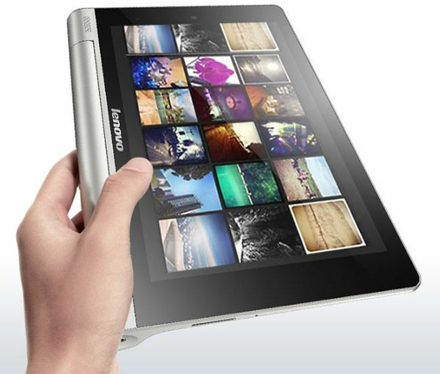
Can you use a tablet with one hand? For most tablets,the answer is no,especially for long periods. Chinese manufacturer Lenovo is attempting to change that perception with a cylindrical metal grip on one side that lets users hold the tablet easily. Lenovo’s Yoga moniker is no longer reserved for ultrabooks that can be bent backwards. The Chinese manufacturer,which recently said it has moved from being a PC maker to a PC-plus company,has brought the Yoga brand name to two unconventional tablets. Lenovo Yoga Tablet comes in two screen sizes. The 8-inch variant costs Rs 22,999,while the 10-inch model costs Rs 28,999. We reviewed the 8-inch Yoga Tablet,so read on to find out if the tablet is worth buying. Design: Before venturing into the tablet’s build,it is best to take a look at what is new. In a tablet market full of lookalikes,Lenovo Yoga Tablet stands out for its unique design. The tube grip on one edge of the tablet makes it easy to hold. Twisting the tube reveals a tiny stand,which is by far the most innovative addition to a tablet. If you have ever used an iPad with Apple’s smart cover,you would know how much the typing experience improves after you fold the cover into a triangle to raise one edge of the iPad. The stand on the Yoga Tablet lets you do the same thing without paying around Rs 4,000 more,unlike the iPad. But at 401 grams,the tablet is too heavy for one-hand use. Users can also use the stand to prop up the tablet. This,along with the front-facing speakers and Dolby sound,make watching films enjoyable on the Yoga Tablet. The only gripe is that the speakers were not loud enough for noisy places,but are good for watching films at home. Holding a tablet in your hand while watching films is cumbersome for various reasons such as aching or sweating hands,and the device’s rising temperature,especially during summers. The stand eliminates that irksome experience altogether. Lenovo is known for making sturdy devices,as evident with the company’s rugged ThinkPad laptops,and the Yoga Tablet is no exception. The back panel of the tablet is made of metal and so is the tube grip. This gives the tablet a sturdy feel. The placement of the power button is unconventional – at one end of the tube grip – but it’s easy to find once users get used to the device. Performance: Lenovo’s practical approach to the tablet’s design was encouraging,but the display is far from the best. Yoga
Tablet 8’s pricing pits it squarely against last year’s iPad Mini and the display is just a shade inferior when compared to Apple’s device. However,those looking to buy the 10-inch Yoga Tablet can get a much better display on the iPad Mini Retina (Rs 28,900). Those used to Retina display will find it very hard to accept the lower resolution screen on the Yoga Tablet. However,that is a compromise users will have to live with at this price point. Yoga Tablet runs Android 4.2.2,but Lenovo has customised the OS. The app drawer has been removed entirely,which means that you will not have to tap a button to view a list of apps. All your apps are on the home screen by default,just like the layout in Apple’s iOS. One area where the software differs from iOS is that you can place widgets on the home screen. I did not like Lenovo’s customisations since stock Android feels much smoother and refined. There is no point trying to change the interface if the company cannot improve user experience. A slight lag was noticed when swiping between home screens,especially when many widgets were placed on one of the home screens. For a mid-range tablet,the device performed as expected. This tablet is capable of running most games,but don’t buy it if you want to play heavy games,such as Real Racing 3,all day. As with most tablets,the Yoga Tablet’s camera is poor. Android and excellent battery life are rarely seen in the same sentence. Earlier this year,Lenovo’s P780 smartphone proved that stereotype wrong,although the phone was a little too bulky for most people. With the Yoga Tablet,Lenovo has given users excellent battery life in a sleek form factor. The secret – the tube grip houses its battery. It lasted around 10-11 hours on moderate to heavy usage. Should you buy it? Yes,it’s good enough for most Indian users,especially since it supports 3G and voice calls. Yoga Tablet deserves credit for excellent ergonomics and battery life – two basic features that every tablet should perfect. However,buyers will have to live with Yoga Tablet’s low-resolution display and the dearth of excellent tablet-optimised apps on Android. Most people would want to install a custom launcher (such as Nova Launcher) to get rid of Lenovo’s poor software customisation. Price: Rs 22,999+ Source: Indian Express
Yesterday, Google has launched the 'Android One' mobile phones in India based which at the price ranging between Rs, 6,000 to Rs., 10,000 of three different models from the Indian manufactures. The Google One is the low cost mobile platform which is first launched in India and later it will released in other countries. Later on these phones will be launched in Indonesia, the Philippines, Pakistan, Bangladesh, Nepal, and Sri Lanka. The cost of these phones will be near about $100. The Android One sets a minimum set of standards for the mobile phones. Three phones has be launched yesterday, these are Canvas A1 from Micromax, Sparkles V from Karbonn and Dreams Uno from Spice. There are many device and component manufacturers who have signed up to use Android One in their phone/hardware. These mobile phone manufactures include Acer, Alcatel, Asus, HTC, Intex, Lava, Lenovo, Panasonic, Xolo, and chipmaker Qualcomm. "We expect to see even more high-quality, affordable devices with different screen sizes, colors, hardware configurations and customized software experiences," Pichai said in a blog post. The mimimum specification of the 'Android One' phone are "4.5 inch display at 854 x 480 pixels, dual SIM support, Android 4.4 and a 1.3GHz quad-core processor". Other manufacturers will start producing the phones based on the 'Adnroid One' platform. 'Android One' mobile phones are high quality, highly tuned for the Android OS and with many features, such cameras, dual SIM and many more features. The features of 'KARBONN SPARKLE - V' are: (1) 4.5" FWVGA display (2) Cortex A7 1.3 GHz Quad-Core processor (3) 1GB RAM (4) 4GB storage (expandable up to 32GB) (5) 2x micro SIM (6) Front and rear facing cameras (2MP and 5MP) (7) Rechargeable lithium-ion, 1700mAh (8) Android? 4.4, KitKat® (and gets the new version soon after it's released) Source: News Track India, Image: flickr.com
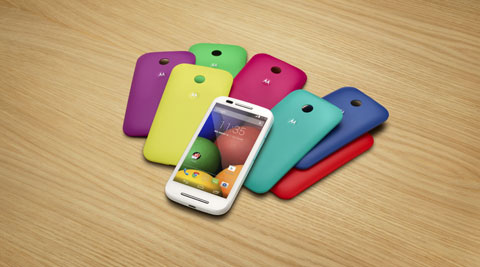
There are quite a few low-cost Androids releasing in India, all of them priced around the Rs. 7,000 mark. But all of them — be it the Moto E, Micromax Unite or Lava X1— come with only 4GB of internal memory and that bottleneck makes it a no-go for many users. With smartphones that cost Rs. 10,000 or more, internal memory is uncompromisable. But when the cost goes lower, 4GB is all you get so it’s not a question of compromising, it’s all there is. And soon enough, you will see the dreaded message when an app can’t be installed: “Insufficient storage available.” Why is 4GB not enough? There is a microSD slot after all: The Moto E runs on Android 4.4 KitKat, and with this new version of the operating system, Google has changed the rules for how apps can be installed on your external storage. Without getting into too much jargon, here’s what you need to know: some developers can choose to make apps specifically for KitKat which can easily be installed from the Play Store. However, that’s not something most of the popular apps on the Play Store have right now, including the likes of Whatsapp, Dropbox and more. Also, apps that come preloaded on your phone cannot be moved to the external storage. And this means that any update that the app gets will also be installed on your internal memory. Use it for a few months and that size quickly bloats up. Why, even with just a week of usage, the Google+ app had ballooned to 55.48MB while Google Search was clocking in at 38.18MB. While apps are limited, the microSD card can be used to store and access all your media, be it the photos and videos you shoot or the music and movies you want to watch. Is there a workaround? Yes and no. The workaround for this limitation currently involves rooting your smartphone and then installing an app called SDFix, which lets apps be installed to external storage. However, rooting your phone is not something we recommend unless you know what you are doing. We do recommend you install AppMgr III (App 2 SD), even if your phone is not rooted. This tool analyzes all the apps installed on your Android and tells you which ones can be moved to the SD card. In fact, whenever you install a new app or game, it will prompt you to move it to the SD card if the app allows for it. It’s simple enough for you to do it without much worry. There are two things you need to be aware of with moving apps to the external storage. First, these apps won’t work when you connect your phone to the PC and switch on storage mode. Second, the widgets of any app will not work when moved. So are the Moto E, Micromax Unite and others useless? Not at all! They are just limited in what they can be used for, and it’s important to know this limitation because that’s how you can decide whether such a phone is for you or not. If you are someone who likes to try out new apps, play a lot of games, use several widgets, or are a general power user, then these phones are not worth it for you. They just won’t deliver the experience you are looking for. If you are someone who just wants the basics—calls, SMS, email, WhatsApp, browsing, etc.—then the 4GB limitation is something you probably won’t mind because you are unlikely to install enough new apps or games to be affected by it. However, do note that every 6 months or so, you will see an error saying you are running out of storage space. Don’t worry though, this is usually just cache built up on your phone, so run have to clean your phone’s cache. It’s easy to remove that junk with 1Tap Eraser. And if the problem is still not solved, runDiskUsage to see what’s taking up the most amount of memory and delete it Source: The Indian Express
NASA plans to send Google smartphones with state of the art 3D sensing technology into orbit to use them as eyes and brains for its newest sci-fi inspired machinery. The gadgets will be installed into hovering robots and boost the agency's Synchronized Position Hold, Engage, Reorient, Experimental Satellites, otherwise known as SPHERES, on the International Space Station. NASA hopes that this will allow SPHERES to relieve astronauts of their daily chores and, perhaps, even handle the tricky duties in outer space. New Google smartphones being part of the company's futuristic Project Tango AD mapping service with the new augmented reality technology are scheduled to be transported on July 11 via a cargo spacecraft. There, the gadgets will be connected to another visionary technology, SPHERES, inspired by none other than the legendary movie Star Wars where a hovering football-sized robot helps Luke Skywalker practice his Jedi lightsaber skills. NASA's SPHERES can navigate because of microgravity in the space station's interior and microscopic blasts of CO2 that propel the globes around two and a half centimeters per second. When just sent into orbit in 2006, SPHERES' functions were limited to slowly moving around the space station, so in 2010 NASA's Ames Research Center in Mountain View based in California set its engineers with a task to smarten up the robots. Smart SPHERES project manager Chris Provencher told reporters in an interview that the company "wanted to add communication, a camera, increase the processing capability, accelerometers and other sensors." "As we were scratching our heads thinking about what to do, we realized the answer was in our hands," Provencher said. "Let's just use smartphones." As a test drive, the engineers then purchased phones at Best Buy, added extra batteries, built in shatter-proof displays and sent the gadgets to the space station, where astronauts attached the altered phones to SPHERES. This simple manipulation allowed the robots to be more like their sci-fi prototypes, propelling them to the next level of sense and visual capabilities. However, off-the-rack smartphones were still not enough to allow SPHERES the kind of independence engineers envisioned. This is where NASA turned to Google which just recently developed experimental smartphones that can give "a human-scale understanding of space and motion." The phones include batteries tested in space and plastic connectors and were opened in such a way that the sensors and touchscreen face outwards when attached to the SPHERES. The futuristic Project Tango handsets have an infrared depth sensor and a motion-tracking camera, which will allow to create a 3D map of the station that should help the SPHERES navigate. "This type of capability is exactly what we need for a robot that's going to do tasks anywhere inside the space station," Provencher commented, adding that it "has to have a very robust navigation system." Source: Article
We all know this travel frustration when you have arrived but your Luggage hasn't. It can take hours or even days to find the lost suitcase that may not turn up at all. But with new smart bags the problem will be gone – recently the jumbo jet maker Airbus has introduced bags with embedded GPS tracking chips capable of transmitting their locations to travelers and even contacting airlines directly when they get lost. The product, known as Bag2Go, updates you about your stuff via a smartphone app “Find My Bag” that allows to check whether a bag has made it on board and trace its location. The bag also allows self-service check-ins and can weigh itself to ensure that it meets airline requirements. It is a fruit of cooperation between Airbus, the famous German luggage maker Rimowa and US mobile carrier T-Mobile. However, the carrier's major competitor AT&T unveiled a similar concept at a demonstration of its "next-generation technologies" in May. The company envisions integrating the product with standard suitcases and bags (it might be an attachable tag or could also be built into suitcases directly). The thing works due to an RFID chip (an intelligent bar code that can talk to a networked system) inside the bag - it "pairs" smart-chipped bag tags with the flight itinerary and frequent flyer number. The ultimate goal of the designers is to work with the airlines IT system, contacting the carriers and get the luggage delivered to the owner's hotel. Though the products are still in the developmental stage and need approval from federal regulators, they're much awaited: US airlines mishandled over 141,000 bags in April, according to government statistics. Olga Yazhgunovich,Source: Voice Of Russia
The new XW H1/2/3 range of headphones H1/2/3 have balanced, clear sound with nothing added and nothing left out. These headphones were designed by audiophiles to faithfully reproduce accurate, natural sound across the entire audio spectrum, from crisp, clear trebles to rich, deep bass notes. They meet the most exacting standards of audio quality so that the user hears music exactly the way the artists intended. These head phones have encapsulated comfort-fit ear pads for focused listening. The ear pads were selected through extensive testing to be comfortable to wear even during long mixing sessions and provide superior isolation from background noise to avoid distractions and focus on the music. Additionally, the XW-H1/2/3 headphones have detachable, tangle-free flat cable. A flat cable design eliminates tangles and makes it easy to store the headphones while on the move, and the high-definition cable is also detachable for easy replacement. Therefore, the user never has to untangle the cable again and will just put on the headphones and start listening. Furthermore, these headphones have folding headband for portability and protection and were designed with on-the-go professional DJs in mind. The folding headband ensures that the headphones fit easily and store securely in a DJ bag to protect them during travel between clubs. This uniquely designed headband is both durable and surprisingly lightweight. Speaking about the new XW-H1/2/3 headphone Kulbhushan Seth, Vice President, Marketing, Casio India said, “The X W-H1/2/3 headphones are ideally suited for on-the-go professional DJs and music enthusiasts as they combine high audio fidelity with superb usability. What’s more, their stylish designs and vibrant colours makes them a must buy for music lovers.” Source: The Indian Express
One of the unbroken rules of modern life is that anyone plugging in a USB cable will first try to put it in the wrong way up. Now, with the iPhone 6, Apple looks set to end that particular first-world problem. Reports suggest that the new handset, expected to launch next month, will come with a "Lightning" cable that can be plugged into a USB port either way up. Existing Apple products come with Lightning cables that can be plugged into an iPhone or iPad either way around, but still have to be lined up correctly with the USB port. Does Apple slow old iPhones before a new release?: The latest leaked images and patent filings suggest that when Apple launches the iPhone 6, probably next month, it will introduce a cable that's reversible at both ends. The Australian blogger Sonny Dickson, who has a good track record for leaking accurate information about forthcoming Apple products, tweeted an image of the new cable yesterday. The Guardian suggests that Apple has been working on the new cable for some time. "A patent filed in 2013 by Apple, however, describes 'reversible or dual orientation USB plug connectors' that can be plugged into any standard computer USB port to "reduce the potential USB connector damage and user frustration'," the paper says. "The connector design would be compatible with any current and future full-sized USB ports on computers and other devices." Not everyone has welcomed the news of Apple's apparent breakthrough, with some seeing it as yet another way in which the company seals its products off from the rest of the technological ecosystem. "The joke goes: if there is a universal standard Apple will find a way to make it proprietary," writes Gordon Kelly for Forbes. "Well now it seems not even USB is safe." Apple has a track record of moving in the opposite direction from its rivals. As most of the smartphone industry standardised its charging and docking cables, Apple introduced the first Lightning cable, which was incompatible with all other devices, including previous models of iPhone. Its latest move also puts Apple at odds with its rivals, who are preparing to step away from the existing USB cable. A new "Type-C" cable, with a much smaller USB connector, is expected to appear before the end of the year. It will be faster than its predecessor – and there will be no "wrong way" to insert it – but it will not be compatible with existing devices or ports. This could lead to a novel situation in which the iPhone 6 is compatible with more existing PC equipment than new Android or Windows smartphones. The catch is that the Apple cable will not be compatible with the Type-C USB cable – although it's likely that new and old USB ports will exist alongside each other for some time. More iPhone 6 rumours: There is no shortage of speculation about what will be included in the next iPhone, some of which seems to be based on wishful thinking: Sapphire crystal: the use of sapphire crystal (also known as sapphire glass) for the iPhone 6 screen has been one of the most persistent rumours about the new handset. Apple is known to have invested heavily in the super-strong manmade material, which is resistant to scratching and bending, but
recent reports suggest that it has been having trouble making it in sufficient quantities – and at sufficiently low costs – to furnish an iPhone production run of 100 million units or more. The Guardian recently suggested that Apple may end up using a blend of glass and sapphire crystal. A Liquidmetal shell: As Apple strives to make the new handset as slim and strong as possible, some commentators have speculated that it may turn to Liquidmetal, an alloy that's stronger than aluminium. In theory that would mean the handset could be lighter and slimmer without skimping on strength or build quality, but in practice it seems unlikely. Although one of the inventors of Liquidmetal predicted two years ago that Liquidmetal cases would be possible by mid-2014, its use has so far been limited to small components. Liquidmetal components: This is much more likely. Documents published by Apple-watching website MacRumors, suggest that the alloy could be used in buttons and switches in order to toughen up what have often proved to be weak points on previous iPhones. Aluminium frame: Although Liquidmetal may be off the cards, most of the leaked images and technical drawings suggest that Apple will adopt an all-metal rear frame for the iPhone 6. Previous iPhones have made either extensive or decorative uses of glass, but this year's preview shots appear to show a rear panel fashioned entirely from aluminium – with a cut-out for the Apple logo. Super-slim frame: Whatever it's made from, most commentators expect the iPhone 6 to be noticeably slimmer than its already svelte predecessor. A few months ago some were predicting a depth of just 6mm, but specs supposedly leaked by Amazon in recent weeks suggest we can look forward to a 7mm iPhone. The slender dimensions are apparently causing problems for component-makers: the difficulty of making a battery that's just 2mm thick has reportedly led to production delays. A8 chip: Concerted speculation that the new device would include a revamped processor has been "confirmed" by Venturebeat. "The A8 will run at a frequency of 2.0 GHz per core and will create noticeably faster response time and graphics rendering in the new phones," its source says. "By comparison, the A7 chips in the iPhone 5 run at only 1.3GHz per core." Even if those details prove wide of the mark, a newer, speedier chip is a safe bet: Apple is unlikely to build an all-new phone around old technology. 13-megapixel camera: There has been comparatively little speculation about the iPhone 6 camera, but tentative reports out today suggest that Apple may build in a 13-megapixels sensor capable of recording
high-resolution 4K video. "Apple is well-known for investing millions into its camera sensor, though the company has always refrained from entering the megapixel count race because adding more megapixels tend to have an negative effect on the low-light performance," Tech Times says. But the website sounds a note of caution: "The original source comes from a Chinese web forum, which may not be the best place to find legitimate iPhone 6 leaked information." Optical image stabilisation: MacRumors says the bigger of the two iPhone 6 models "may include camera improvements in the form of optical image stabilisation with modules produced by sensor company InvenSense". Camera performance is becoming increasingly important at the top end of the smartphone market, and analysts suggest that optical stabilisation, which reduces image blur, could help to justify a larger price tag for the 5.5-inch iPhone 6. A curved screen: At the end of last year Bloomberg carried a report predicting the next iPhone models would have screens that curved down at the edges. Curved screens are said to be more durable, more comfortable to use, and better suited to watching videos and playing games, according to Sky News. This would be a bold move for Apple, which usually likes to stand back and see how other phone-makers fare with new, risky technologies – and more recently a source told The Wall Street Journal that Apple has no plans to make use of curved glass. However, despite all the leaked images apparently showing the iPhone 6 with a flat screen, rumours of curved glass have resurfaced, most recently in the Daily Mirror. Quantum dots: This is probably a technology for future handsets, not the iPhone 6. Patent filings suggest Apple is experimenting with tiny crystal semiconductors just a few thousandths of a millimetre across, which could improve the colour and sharpness of mobile screens. "The techniques Apple describes would let its screens not only show colours more accurately," Business Insider says, "but also show a wider gamut of colours." The publication had predicted in March that the quantum-dot screen may be ready this year, but no further reports of the technology have emerged. Battery life: Mixed signals have emerged about the iPhone 6 battery life. On the positive side, analysts have pointed to iOS 8, Apple's new operating system, and its new A8 processor as evidence
that the company is paying more attention to power consumption. The chip, says 9to5Mac.com "adds significant performance and efficiency enhancements in order to improve the iPhone’s battery life". On the other hand, more recent reports suggest that the slim frame of the new phone has forced Apple to adopt a battery that is just 2mm thick. Taiwanese sources suggest that the new battery has a "similar capacity" to its predecessor, which may dash hopes of significantly improved performance. Eye-tracking: Some rumours suggested that the iPhone 5S would be eye-controlled, allowing users to scroll through pages without touching the device. When the technology failed to materialise in the last model, hopeful observers shifted their attention to the iPhone 6. NFC: Another long-predicted feature, Near Field Communication or NFC would allow the phone to act as a payment system. Users would wave their handsets over a receiver to transfer money in shops and restaurants, or between friends. Several Android and Windows Phone devices already support NFC payments, but Apple has yet to make the leap. Health monitors and apps: Apple has already unveiled its new operating system, iOS 8, and what we've seen so far suggests that Apple is turning its attention to health and fitness. Smartphone accessories such as the Fitbit and FuelBand have proven the demand for health-monitoring devices, and reports suggest that the iPhone 6 will be able to keep track of its owners pulse and body temperature, as well as other metrics. These features may work in conjunction with the long-awaited Apple iWatch. Price: Financial analysts suggest that the iPhone 6 will be more expensive than its predecessors, in part because of the cost of new components, and in part to re-establish the profit margin eroded by last year's upgrade. When Amazon Japan apparently leaked details of the new device last month, the price, which was the equivalent of £100 higher than a similar iPhone 5S model, took many commentators by surprise. It's unclear whether the leak reflected genuine pricing information, or even if it was a way for Apple to test reaction to a price rise. Production run: After relatively minor iPhone upgrades last year, analysts expect this year's more substantial changes to create unprecedented demand. According to the Wall Street Journal, Apple "is asking suppliers to manufacture between 70 million and 80 million units combined of two large-screen iPhones with 4.7-inch and 5.5-inch displays by Dec. 30". That's substantially more than the 50 to 60 million iPhone 5S and 5C production run last year, and a huge leap from the 35.2 million iPhones sold in the three months to June. Source: The Week UK, Open Images In New TabTo Find its Source Of Sharing.


 – Getty Images for Unsplash+