|
The announcement by Science Minister Judith Collins this week that half of New Zealand’s sole fund for fundamental science will now go to research with economic benefits – with social sciences and the humanities no longer supported – came as a shock to many. Perhaps it shouldn’t have. The signs have been there for a while. In August, Collins spoke at the 30th anniversary celebration of the Marsden Fund. Her insistence on economic impact worried many in the room because this fund was meant to support pure – not applied – research. Her statement that “we must endeavour to invest our money in areas that we believe have the best chance of showing a return on investment” may not seem extraordinary. Indeed, for most government research funding – including through the Endeavour Programmes, Smart Ideas funding, the Crown Research Institutes or the Health Research Council – the purpose of research is important. But this is explicitly not what the Marsden Fund was set up to do. Former National Party minister Simon Upton quoted his own words from 30 years ago at the anniversary event:
A bipartisan historyThe Marsden Fund was set up to underpin the generation of knowledge in our university and science systems. In its latest allocation last month, the fund invested NZ$$75.82 million to support 113 projects. But the funded projects represent only 10% of the applications received (12% for the shorter fast-start grants). These low success rates mean many good ideas miss out. The proposed change is massive: the issues with expecting research to deliver predetermined outcomes – referred to in science policy terms as “picking winners” – have been discussed for a long time. If we could know the outcomes of a research project in advance, we could undoubtedly be more efficient in allocating funding. But if we knew the outcomes, it wouldn’t be research, and any knowledge produced would not be new. More targeted research is, of course, useful and is therefore funded by the different mechanisms mentioned above. But the ideas that underpin real value in commercially viable science are often first prompted by discoveries in fundamental science. If it were something everyone already knew, it wouldn’t be intellectual property. Cather Simpson, a physicist at the University of Auckland, founder of three deep-tech start-ups, and a winner of the Kiwinet Commercialisation Icon award puts it this way:
 Science minister Judith Collins wants the Marsden Fund to focus on funding research in physics, chemistry, maths, engineering and biomedical sciences. Getty Images Science minister Judith Collins wants the Marsden Fund to focus on funding research in physics, chemistry, maths, engineering and biomedical sciences. Getty ImagesWhere to from here?In her announcement, Judith Collins said she wants the Marsden Fund to focus on “core science”. In her definition, this means physics, chemistry, maths, engineering and biomedical sciences. Some argue these cost more, because of equipment or laboratory costs, than the humanities and social sciences, which are now excluded from the fund. This is true in part. But New Zealand already has all the other funding mechanisms to support applied research with economic impact. The humanities and social sciences have no other major source of baseline research funding. When the ACT Party shares figures amounting to hundreds of thousands of dollars for research that sometimes looks like it produces no more than reports and books, their concerns about the value of this expenditure may seem valid. But it is important to understand where the money allocated by the Marsden Fund actually goes. New Zealand has had a fully-costed research system for a long time. This means that for every dollar the grant pays for researchers’ salaries, the university (or other employing institution) is paid 115% in addition. The money paid to institutions is called “overheads”. It is essentially direct funding for universities for office space and administrative support and it may pay for student scholarships, software licenses or travel – the basic costs of getting the research done. But it is not a nice-to-have: in many other countries, the proportion of direct funding for universities is higher, because they do not have this fully-costed research funding model. Reducing the overhead rate paid on research grants has been discussed as one way to make research funding go further. But we must be realistic: direct funding for universities would need to increase significantly to make up the difference. This might be one way of enabling institutions to support the humanities and social sciences through internally allocated research funds. Preempting the science sector reviewNew Zealand is currently in the middle of reviews of the university system and the science sector. Advisory groups have reported back to the government with their recommendations, but the government has delayed making these public. The changes to the Marsden Fund have been announced before the overdue science review, preempting whatever recommendations the review will bring. The science system is a complex entity and unilateral changes to any single part of it will have unintended consequences. In the absence of direct research funding for humanities and social sciences, one such consequence is that the existence of many of these areas of scholarship will be even more threatened than we’ve seen already, as many universities have shed staff and cut entire departments. The alternative is that we accept major cuts to our tertiary education system. That would be a loss for everyone. Not only would we lose the return on investment associated with university education, or see a diminished economic impact from science. We would also risk eroding the “critic and conscience” work done by academics in the humanities and social sciences that plays an essential role in a free society. Nicola Gaston, Co-Director of the MacDiarmid Institute for Advanced Materials and Nanotechnology, University of Auckland, Waipapa Taumata Rau This article is republished from The Conversation under a Creative Commons license. Read the original article. |

Funding research for economic return sounds good – but that’s not how science really works (2025-06-14T11:38:00+05:30)


CES 2025: AI-powered tech to dominate world's biggest electronics trade show (2025-06-14T11:38:00+05:30)


6 innovative technologies saving restaurants money and changing the industry (2016-09-22T21:42:00+05:30)


With low-cost Androids like Moto E, limited memory means limited use (2015-08-09T01:05:00+05:30)
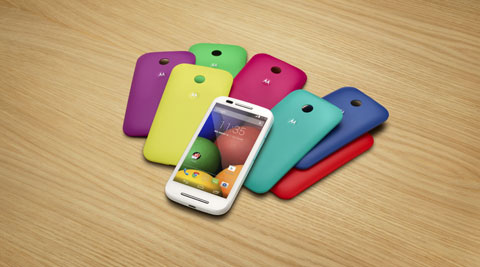 There are quite a few low-cost Androids releasing in India, all of them priced around the Rs. 7,000 mark. But all of them — be it the Moto E, Micromax Unite or Lava X1— come with only 4GB of internal memory and that bottleneck makes it a no-go for many users. With smartphones that cost Rs. 10,000 or more, internal memory is uncompromisable. But when the cost goes lower, 4GB is all you get so it’s not a question of compromising, it’s all there is. And soon enough, you will see the dreaded message when an app can’t be installed: “Insufficient storage available.” Why is 4GB not enough? There is a microSD slot after all: The Moto E runs on Android 4.4 KitKat, and with this new version of the operating system, Google has changed the rules for how apps can be installed on your external storage. Without getting into too much jargon, here’s what you need to know: some developers can choose to make apps specifically for KitKat which can easily be installed from the Play Store. However, that’s not something most of the popular apps on the Play Store have right now, including the likes of Whatsapp, Dropbox and more. Also, apps that come preloaded on your phone cannot be moved to the external storage. And this means that any update that the app gets will also be installed on your internal memory. Use it for a few months and that size quickly bloats up. Why, even with just a week of usage, the Google+ app had ballooned to 55.48MB while Google Search was clocking in at 38.18MB. While apps are limited, the microSD card can be used to store and access all your media, be it the photos and videos you shoot or the music and movies you want to watch. Is there a workaround? Yes and no. The workaround for this limitation currently involves rooting your smartphone and then installing an app called SDFix, which lets apps be installed to external storage. However, rooting your phone is not something we recommend unless you know what you are doing. We do recommend you install AppMgr III (App 2 SD), even if your phone is not rooted. This tool analyzes all the apps installed on your Android and tells you which ones can be moved to the SD card. In fact, whenever you install a new app or game, it will prompt you to move it to the SD card if the app allows for it. It’s simple enough for you to do it without much worry. There are two things you need to be aware of with moving apps to the external storage. First, these apps won’t work when you connect your phone to the PC and switch on storage mode. Second, the widgets of any app will not work when moved. So are the Moto E, Micromax Unite and others useless? Not at all! They are just limited in what they can be used for, and it’s important to know this limitation because that’s how you can decide whether such a phone is for you or not. If you are someone who likes to try out new apps, play a lot of games, use several widgets, or are a general power user, then these phones are not worth it for you. They just won’t deliver the experience you are looking for. If you are someone who just wants the basics—calls, SMS, email, WhatsApp, browsing, etc.—then the 4GB limitation is something you probably won’t mind because you are unlikely to install enough new apps or games to be affected by it. However, do note that every 6 months or so, you will see an error saying you are running out of storage space. Don’t worry though, this is usually just cache built up on your phone, so run have to clean your phone’s cache. It’s easy to remove that junk with 1Tap Eraser. And if the problem is still not solved, runDiskUsage to see what’s taking up the most amount of memory and delete it Source: The Indian Express
3D Google smartphones to help NASA robots navigate in space (2015-06-10T01:38:00+05:30)
 NASA plans to send Google smartphones with state of the art 3D sensing technology into orbit to use them as eyes and brains for its newest sci-fi inspired machinery. The gadgets will be installed into hovering robots and boost the agency's Synchronized Position Hold, Engage, Reorient, Experimental Satellites, otherwise known as SPHERES, on the International Space Station. NASA hopes that this will allow SPHERES to relieve astronauts of their daily chores and, perhaps, even handle the tricky duties in outer space. New Google smartphones being part of the company's futuristic Project Tango AD mapping service with the new augmented reality technology are scheduled to be transported on July 11 via a cargo spacecraft. There, the gadgets will be connected to another visionary technology, SPHERES, inspired by none other than the legendary movie Star Wars where a hovering football-sized robot helps Luke Skywalker practice his Jedi lightsaber skills. NASA's SPHERES can navigate because of microgravity in the space station's interior and microscopic blasts of CO2 that propel the globes around two and a half centimeters per second. When just sent into orbit in 2006, SPHERES' functions were limited to slowly moving around the space station, so in 2010 NASA's Ames Research Center in Mountain View based in California set its engineers with a task to smarten up the robots. Smart SPHERES project manager Chris Provencher told reporters in an interview that the company "wanted to add communication, a camera, increase the processing capability, accelerometers and other sensors." "As we were scratching our heads thinking about what to do, we realized the answer was in our hands," Provencher said. "Let's just use smartphones." As a test drive, the engineers then purchased phones at Best Buy, added extra batteries, built in shatter-proof displays and sent the gadgets to the space station, where astronauts attached the altered phones to SPHERES. This simple manipulation allowed the robots to be more like their sci-fi prototypes, propelling them to the next level of sense and visual capabilities. However, off-the-rack smartphones were still not enough to allow SPHERES the kind of independence engineers envisioned. This is where NASA turned to Google which just recently developed experimental smartphones that can give "a human-scale understanding of space and motion." The phones include batteries tested in space and plastic connectors and were opened in such a way that the sensors and touchscreen face outwards when attached to the SPHERES. The futuristic Project Tango handsets have an infrared depth sensor and a motion-tracking camera, which will allow to create a 3D map of the station that should help the SPHERES navigate. "This type of capability is exactly what we need for a robot that's going to do tasks anywhere inside the space station," Provencher commented, adding that it "has to have a very robust navigation system." Source: Article
Though 3-D printing may lead in new manufacturing processes, it lags in sustainability (2014-12-29T21:19:00+05:30)

Wasted plastic remains an unfortunate by-product of the 3-D printing process.
By April Nowicki: Three-dimensional printing is the new industrial revolution. Members of the Boulder hackerspace Solid State Depot say interest in 3-D printing will only continue to grow as more people learn to use the technology. "If you're making one to 10 of something, 3-D printing is almost certainly one of the fastest and cheapest ways to make it," says Rob Bryan, a member of the Depot's board of directors. But it's a wasteful process, says member Ty Syt. And that's not just because components of a printer are often made in China and have the same carbon footprint of any item manufactured there and shipped across the world. It's also because what the printers create is often hard to recycle. The filament, or string, that is fed through an extruder to print things three-dimensionally, is usually plastic, although some printers can use metal. (Most printed items around the Depot are plastic trinkets that can fit in one's palm.) Though the technology has improved — "The software has gotten so much better at telling you when it's going to be a bad print," says Depot member Ryan St. Pierre — bad prints still happen, and happen often. Says John Wedler, a Colorado Springs resident who spent six months learning to 3-D print on a Solidoodle unit: "Maybe once or twice out of 100 times, you'll have a print that comes out exactly the way you wanted it the first time." Wedler says he has several five-gallon trash bins full of printed parts that came out wrong. Those parts were created with about two spools of filament, or four pounds of plastic. Chris Vestal, president of Pikes Peak Makerspace, says he also has a couple of pounds of bad prints, and expects that much of the 3-D printing Springs community has been saving their bad prints, too. Their plans? To grind them back into filament. Vestal says PPM is planning to buy a grinder/extruder in early 2015. Something similar is in the works at Eight Days a Week, a Boulder imaging and copy center. There, bad prints go into the "graveyard," a cardboard box full of colorful plastic bits that lives underneath a desk. Simon Kugel, a designer for the shop and the resident 3-D printing expert, doesn't throw the bits away because he plans to reuse them one day. Eight Days hasn't accumulated enough of the bad prints yet to need to do something with them. The owner, Sam Sussman, says that much of the filament they use is PLA plastic, which is cornstarch-based and will eventually break down into organic matter in a landfill. But ABS plastic is more durable, Kugel says, and the shop also prints ABS plastic items. And with ABS, even grinding isn't a be-all, end-all. The more times a material is recycled, the more it degrades. "Ideally, you only want to melt it once," says Syt, from Solid State Depot. "Also, it's cheaper to just buy more filament. A spool of filament is around $15 to $25." Some printed items actually can be recycled, depending on what kind of plastic they're made out of, says Teresa Weston, operator at Eco-Cycle in Boulder. Those items must go to Eco-Cycle, which operates a service to collect hard-to-recycle items, not the city's recycling center. (Solid State Depot members haven't tried to recycle bad prints yet.) But variables in printer processes bring different sustainability issues. About a block away from the Depot is Boulder Engineering Studio, where a larger, enclosed 3-D printer sits making printer-type noises in the corner of one work room. John English, partner and CTO of Boulder Engineering Studio, explains how this printer modifies the chemical makeup of the plastic it is printing with — rendering it unable to be recycled. He points out the special ventilation system attached to the printer, directing fumes outside. The printer runs almost nonstop, he says. While 3-D printing may have its problems, it does create opportunities for items that can be environmentally friendly in other ways. The CompoKeeper, a big compost bin with mechanisms for sealing off its contents and repelling insects and pets, was produced by the Boulder Engineering Studio via a 3-D printer. English's colleague worked with the local team for about a year and a half, from initial concept to prototyping, manufacturing and production. "3-D printing was fundamental for that process," English says. "We couldn't have gone down that path in the same way. It would have been a mixture of more time, more work and more money without the 3-D printer."Source: Article
New app: your luggage calling (2014-12-29T19:55:00+05:30)
 We all know this travel frustration when you have arrived but your Luggage hasn't. It can take hours or even days to find the lost suitcase that may not turn up at all. But with new smart bags the problem will be gone – recently the jumbo jet maker Airbus has introduced bags with embedded GPS tracking chips capable of transmitting their locations to travelers and even contacting airlines directly when they get lost. The product, known as Bag2Go, updates you about your stuff via a smartphone app “Find My Bag” that allows to check whether a bag has made it on board and trace its location. The bag also allows self-service check-ins and can weigh itself to ensure that it meets airline requirements. It is a fruit of cooperation between Airbus, the famous German luggage maker Rimowa and US mobile carrier T-Mobile. However, the carrier's major competitor AT&T unveiled a similar concept at a demonstration of its "next-generation technologies" in May. The company envisions integrating the product with standard suitcases and bags (it might be an attachable tag or could also be built into suitcases directly). The thing works due to an RFID chip (an intelligent bar code that can talk to a networked system) inside the bag - it "pairs" smart-chipped bag tags with the flight itinerary and frequent flyer number. The ultimate goal of the designers is to work with the airlines IT system, contacting the carriers and get the luggage delivered to the owner's hotel. Though the products are still in the developmental stage and need approval from federal regulators, they're much awaited: US airlines mishandled over 141,000 bags in April, according to government statistics. Olga Yazhgunovich, Source: Voice Of Russia
Artmoney: a movement making art a currency (2014-10-14T14:29:00+05:30)

By Vasili Sushko: NEW YORK (VOR)— When it comes to art, some pieces are worth much more than others. Some works are worth millions, others just a few bucks. But imagine using art not as décor on your wall, but as cash you can spend in restaurants, hotels, even at your dentist’s office. This is the idea behind an alternative currency called Artmoney, which is growing in popularity around the world. Our New York correspondent Vasili Sushko had a chance to speak with the founder of Artmoney earlier this week, to find out what this alternative currency is all about. Imagine traveling across the United States without a single U.S. Dollar in your pocket, but instead, pieces of art. Imagine renting a bicycle, paying for your meals, paying for a hotel, not with cash but with… yes… art! This is the idea behind an up-and-coming alternative currency called Artmoney, which was first created over a decade ago, but is growing more popular today than ever before. “This is a currency this is actual money. That means you can spend it in a regular shop as full or partial payment for goods and services.” – Lars Kraemmer, Founder of Artmoney. Artmoney is the brainchild of Lars Kraemmer, a native of Canada but now a resident of Denmark. Kraemmer created his first Art Money in 1997, and said the idea caught on rather quickly. “I thought I could make a currency that would liberate me from financial binds more or less. The next year another artist joined the concept and from there it expanded and became more like a collective currency among artists around the world.” – Lars Kraemmer, founder of Artmoney So what exactly is Artmoney? A ‘van Gogh’ hanging in a museum may certainly be worth a lot in cash, but it isn’t Artmoney. Your child’s pre-school finger-painting isn’t Artmoney either. According to Kraemmer, anyone can make Artmoney, but it needs to fit a certain criteria.“Anyone in the world can make Artmoney but you have to agree on the common things. There is a fixed size and there’s fixed information on each Artmoney. There has to be a serial number, a website address, and then the Artmoney artist is registered on our website.” – Lars Kraemmer, founder of Artmoney. So how much is Artmoney worth? Well in fact, each piece of Artmoney holds an identical value of 200 Danish Kroner, which is about 34 US Dollars. You can purchase Artmoney from a number of registered vendors or you can simply create it yourself. Where and how you spend it, is up to you. “If I go traveling I would make Artmoney along my way, on the beach, or in the forest, or in the city. And I would approach the town and make a deal with the local hotel and buy one night for four or five Artmoney, that is how it operates.” – Lars Kraemmer, Founder of Artmoney. Today, Kraemmer’s Artmoney is purchased, sold and spent all across the world. Artmoney isn’t an official Bank or a financial institution, but rather the opposite: a sort of alternative to the dollar, which according to Kraemmer can be considered as a worthless piece of paper. While in this day and age it doesn't seem that Art Money will replace the dollar, the Euro or the Danish Krone anytime soon, Kraemmer said his idea is growing more popular than ever. “It seems to expand rapidly right now. It was a slow birth, it grew very slowly so I think it's an exponential growth that we are watching and now there are more than 1,200 artists involved, and it seems with the number of artists coming in now that we might double in one year. So that would make the project double in size, and that is very fast. It could explode if everything goes well." – Lars Kraemmer, founder of Artmoney" Kraemmer’s vision is that one day his Artmoney will serve as a functional trade system to help those who are poor, or people in areas of war or natural disaster. He also hopes that more people who can’t afford to become art collectors can do so. Source: Article
Knowledge and innovation underpinning of progress and prosperity: President (2014-09-18T16:47:00+05:30)
 The President of India, Shri Pranab Mukherjee inaugurated the Golden Jubilee Celebrations of National Institute of Technology Tiruchirappalli. Speaking on the occasion, the President said knowledge and innovation are the underpinning of progress and prosperity in the twenty-first century. In this age of globalization, we can derive competitive advantage only from an eco-system that is conducive to new learning, research and innovation. NITs must work towards promoting scientific temper in their students. Yet, given the present socio-economic condition of our country, the thrust of research must be to erase backwardness and wipe out deprivation. Innovations must improve the state of the underserved, who want a positive difference in their lives. Institutions like NIT Trichy must support ingenuous ideas that promise betterment for those aspiring to rise up the socio-economic ladder ? help a farmer till the soil better, an artisan perfect his craft or a small entrepreneur improve the productivity of his venture. The President said some of our IITs are in the top 50 in civil and electrical engineering. Five institutions are amongst the top 20 universities amongst BRICS nations. The number of Indian institutions in the top 100 in Asia has increased to 10 this year from 3 in 2013. The NITs, in particular NIT Trichy, should take a cue from successful Indian institutions on how to approach the rating system. Featuring in international rankings has several positive spin-offs, in terms of intangibles like boosting the spirits of students and faculty, to more tangible benefits like better placement for students. More importantly, active participation in rankings will propel the development of institutions in the right direction. The President said India has recently become a permanent member of the Washington Accord, which is an international accreditation agreement amongst 17 countries for professional engineering degrees. India?s entry will enable global recognition of our degrees and increase the mobility of our engineers. It will enjoin our technical schools to adhere to global benchmarks in quality. (PIB), Source: Article, Image: flickr.com
Running on waste heat: thermoelectric devices turn waste heat into electricity (2014-09-01T19:20:00+05:30)
It's estimated that more than half of US energy - from vehicles and heavy equipment, for instance - is wasted as heat. Mostly, this waste heat simply escapes into the air. But that's beginning to change, thanks to thermoelectric innovators such as MIT's Gang Chen. Thermoelectric materials convert temperature differences into electric voltage. About a decade ago, Chen, the Carl Richard Soderberg Professor of Power Engineering and head of MIT's Department of mechanical engineering, used nanotechnology to restructure and dramatically boost the efficiency of one such material, paving the way for more cost-effective thermoelectric devices. Using this method, GMZ Energy, a company co-founded by Chen and collaborator Zhifeng Ren of the University of Houston, has now created a thermoelectric generator (TEG) - a one-square-inch, quarter-inch-thick module - that turns waste heat emitted by vehicles into electricity to lend those vehicles added power. ''Everybody recognises the great potential of waste heat, but the challenge has always been that not many think seriously about systems that can turn that heat into power,'' Chen says. ''It's not just waste heat, it's wasted potential to do useful work.'' In a TEG, electricity is generated when heat enters the top of the module, and then moves through the semiconductor material - packed into the TEG - to the cooler side. The resulting motion of electrons in the semiconductor under this temperature difference creates a voltage that's extracted as electricity. However, in many TEGs, atomic vibrations in the material can also leak heat from the hot to the cold side. GMZ's method essentially slows the heat leakage, leading to a 30 to 60 per cent increase in performance across many thermoelectric materials. The company's TEG can withstand temperatures of roughly 600 degrees Celsius on its hot side (top surface), while maintaining a temperature of 100 C on its cold side (bottom surface). With this gradient of 500 C, a module that's 4 centimeters squared can produce 7.2 watts of power. Installed near a car's exhaust pipe, for instance, this converted electricity could power the car's electrical components, essentially reducing the load on the vehicle's alternator, reducing fuel costs and overall emissions. In June, GMZ successfully generated 200 watts from a larger TEG as part of $1.5 million program supported by the U.S. Department of Energy (DOE). The goal is to eventually integrate multiple 200-watt TEGs into the Bradley Fighting Vehicle, a U.S. military tank, to produce 1,000 watts, helping save on fuel consumed on the battlefield, which can cost $40 per gallon. GMZ is also working under another $9 million DOE grant as part of a program to improve fuel economy in passenger vehicles by 25 percent. GMZ has plans to soon apply its TEGs to cars, with aims of improving efficiency by 5 percent. Decades in the making: The concept of thermoelectrics dates back to 1821. Initially called the Seebeck effect, after its discoverer Thomas Seebeck, it derives from heating one end of a conductive material - a semiconductor, for example - to cause electrons to move to the cooler end, producing an electric current. Applying a current to the material, in turn, carries heat from the hot to the cool end. Thermoelectric technologies picked up steam in the 1950s, as companies and research labs started funding projects to bring the technology to real-world applications. Although these efforts led to niche applications in refrigeration and sensors, large-scale applications did not materialize, because thermoelectric materials are notoriously inefficient: While these materials conduct electricity well, they also conduct heat well, so they'd equalize temperature quickly, leading to a low efficiency. The field remained stagnant for decades. Then, in the 1990s, researchers - including Institute Professor Emeritus Mildred Dresselhaus at MIT - began using nanotechnology to restructure thermoelectric materials for greater efficiency. Chen arrived at MIT in 2001 after researching thin films and nanowire-based thermoelectrics for four years at the University of California at Los Angeles, including a long-distance collaboration with Dresselhaus. At MIT, he continued his collaboration with Dresselhaus and brought in Ren, a materials expert, to develop new materials. Then, in 2008, Chen, Ren, and Dresselhaus met another milestone: They realised a 40 per cent increase in the efficiency of bismuth antimony telluride - materials used in thermoelectric coolers - using an inexpensive process. As described in a Science paper that year, Chen and his team crushed the material into a nanoscopic dust and reconstituted it in bulk form - with grains and irregularities that dramatically slowed the passage of phonons through the material. (Phonons, a quantum mode of vibration, are primary means of heat conduction.) This reined in the heat leakage, while allowing for the free flow of electrons. Using a cost-effective and safe alloy in bulk form meant the material could be applied to a variety of applications. And Chen saw that the method - ''now widely used around the world,'' he says - was ripe for commercialization. ''With thermoelectrics, you're always doing research for potential application,'' he says. ''Once the material was good, it was time to move.'' The world ''needs a device'': To branch out into a startup, Chen found inspiration from MIT's entrepreneurial ecosystem. ''You sort of feel it,'' he says. ''You hear and see what other people are doing and you get inspired.'' (Now, he says, he's become part of that ecosystem, ''guiding students who want to start a company.'') After their discovery, Chen and Ren launched GMZ out of a garage in Waltham, Mass., with the broad goal of developing and commercializing their materials. ''But we were a little naive,'' Chen says. ''It turns out that because the thermoelectric market is small, there's no big buyer. We realized the materials world wasn't just about materials. It needs a device.'' Three years later, they had tangible products to pitch to investors: a device that could draw electricity from solar hot-water collectors and an early version of the current TEG module. They managed to raise $7 million in their first funding round and $18 million a few months later. But challenges persisted. Because there was no similar product on the market, they went through years of trial and error; deciding on materials, for example, is challenging, because in thermoelectric applications there are many types of materials to use and a variety of heat sources. ''The [efficiency] of a material depends on temperature you're facing,'' Chen explains. ''So you have to look at what's the heat source temperature, and what material matches that temperature range.'' For their commercial TEG modules, which the company started producing around 2011, GMZ settled on half-Heusler materials, an alloy with a strong crystal structure that allows great stability at high temperatures. But the company has future plans for other materials: bismuth telluride, lead telluride, the mineral skutterudites, and silicon germanium. Apart from giving the company a boost, the development of TEGs was a means of helping the whole market evolve, Chen says, ''Thermoelectrics isn't something you can see. It's not as recognised as a battery or photovoltaic cell. The whole field needs successful products on the market to sustain, inspire, and stimulate innovation. That's really a mission for people working on this.'' Ultimately, Chen sees GMZ as a big step toward his goal of helping create a more energy-efficient world. ''Most of my research at MIT is about energy,'' he says. ''The motivation for me is really taking this basic research into the real world. I take great pride in that.''Source: domain-b
Does Apple deliberately slow old iPhone's before a new release? (2014-08-20T19:44:00+05:30)
 New research shows Google searches for 'iPhone slow' peak when Apple releases a new iPhone model New research has lent weight to longstanding suspicions that Apple slows down older models of iPhones to encourage users to upgrade to its latest release. The study, compiled by Harvard University PhD student Laura Trucco, analysed worldwide searches for "iPhone slow" and found that the search term spikes massively around the time of new phone releases, The Times reports. The study compared those results with similar searches for one of Apple's main rivals but found that the term "Samsung Galaxy slow" was unaffected by new releases from Samsung. Writing for the New York Times, Sendhil Mullainathan, a professor of economics at Harvard, said that the results were "striking". "Wouldn't many business owners love to make their old product less useful whenever they released a newer one?" Mullainathan wrote. "When you sell the device and control the operating system, that's an option". On the other hand, conspiracy theorists might also see an economic reason for Google to hide search results displaying peaks of concern about the speed of Android operating systems built by Google and used in Samsung smartphones. Mullainathan notes that the research does not prove that Apple has done anything wrong. "No matter how suggestive," he says, "this data alone doesn't allow you to determine conclusively whether my phone is actually slower and, if so, why." He said that there are other plausible explanations for why an older model iPhone may slow down. The latest version of the Apple operating system, iOS, is always tailored to the newest device and may therefore not work as efficiently on older models. Also, artificially slowing phones comes with many problems: "First, the legal risk," Mullainathan says. "Second, competition and consumer rationality should combine to thwart this strategy. All a competitor needs to do is to offer a smartphone that doesn't become a brick as quickly, and more people should buy it." Apple did not respond to requests from The Times for comment. For further concise, balanced comment and analysis on the week's news, try The Week magazine. Subscribe today and get 6 issues completely free. Source: The Week UK